
From the Site #008
Mould That Kept Coming Back: New Fans, New Vents, Same Problem in Dural
A Dural family had done what everyone tells you to do about mould — better exhaust fans, subfloor ventilation — and it came back anyway, in the wardrobes, the bathroom and the laundry. The moisture meter told a different story: the water was coming from above.
New Fans, New Vents, Same Mould
By the time this Dural family called us, they had already done the two things everyone tells you to do about mould.
Better exhaust fans in the bathroom. Subfloor ventilation under the house.
Sensible upgrades, properly installed. And the mould came back anyway — across the wardrobes, in the bathroom, in the laundry, and under the vanity and the laundry cabinet bench.
That pattern is the whole story. Ventilation changes the air. It does not change where the water is coming from.
Why Mould Keeps Coming Back After You Clean It
The question we hear most — on the phone, and in the searches that bring people to this page — is some version of how to get rid of mould permanently.
The honest answer is that you cannot clean your way out of a moisture problem. Mould is the symptom. Water is the cause. Bleach, vinegar, the spray from the supermarket — they treat the surface, and on plasterboard they add more water to a material that is already wet. The spots fade. A few weeks later they are back, usually a little wider.
Permanent means three things, in this order: find the water, stop it, then remediate the rooms properly. Skip the first two and you are renting a clean ceiling, not buying one.
What the Moisture Meter Said
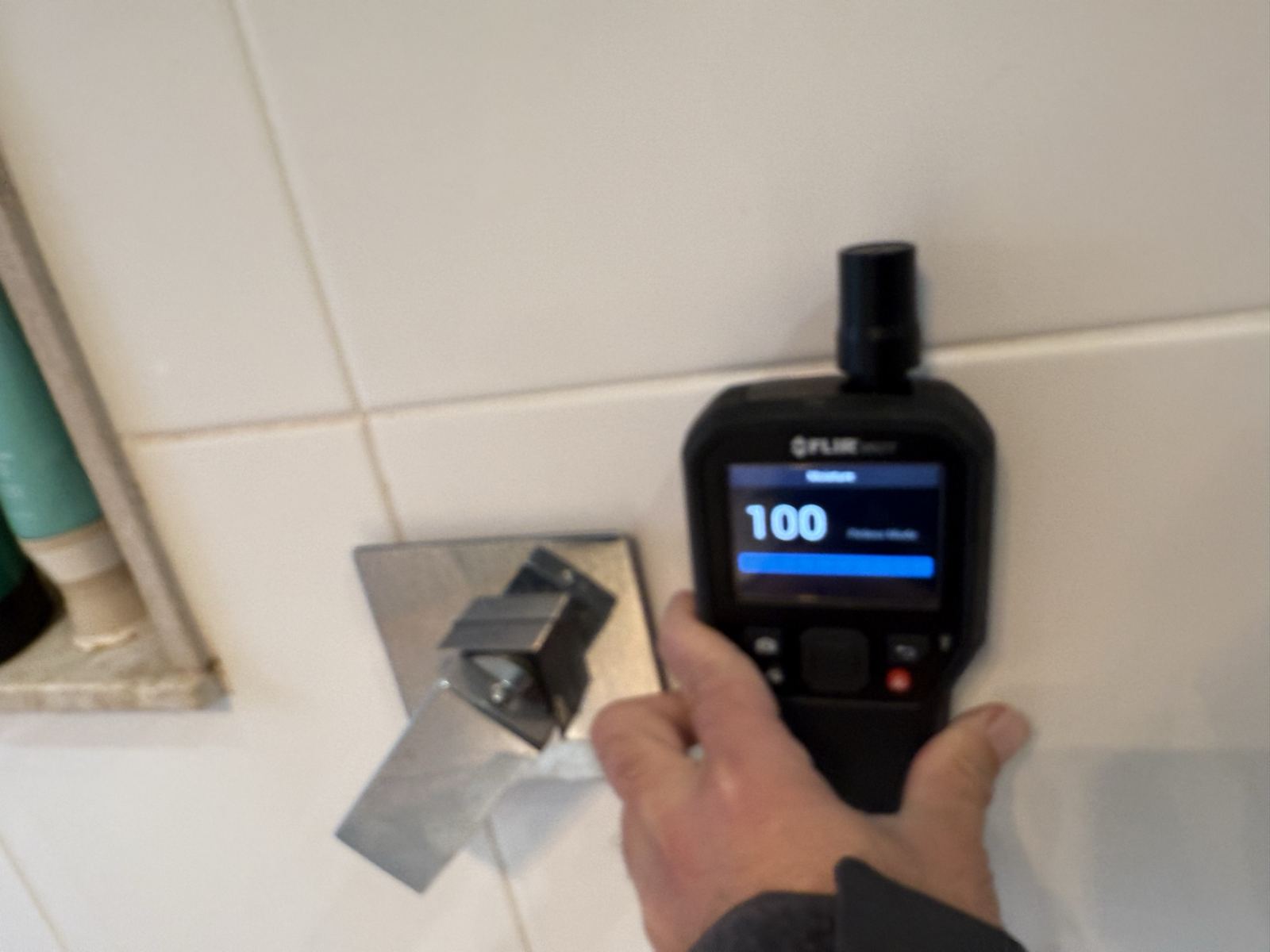
On inspection day the bathroom tiles looked dry. The moisture meter read 100 — the top of its scale — on the tiled wall.
Tiles do not grow mould. The wall behind them does, and so does the ceiling above them. A reading like that on a surface that looks fine is the single most useful fact on a mould inspection in Sydney, because it tells you the problem is inside the building, not on it.
The wardrobes told the same story in a quieter voice. The growth was worst on the top shelves, the cornices and the wardrobe ceilings — the highest points in each room. Rising damp and subfloor moisture show up low: skirtings, the bottom of the wall, the floor. This house was wet at the top.
Wet at the top means water is arriving from above. The most likely source was the roof and the gutters — water tracking into the ceiling space and down through the wall frame, which is exactly where new fans and subfloor vents could never reach.
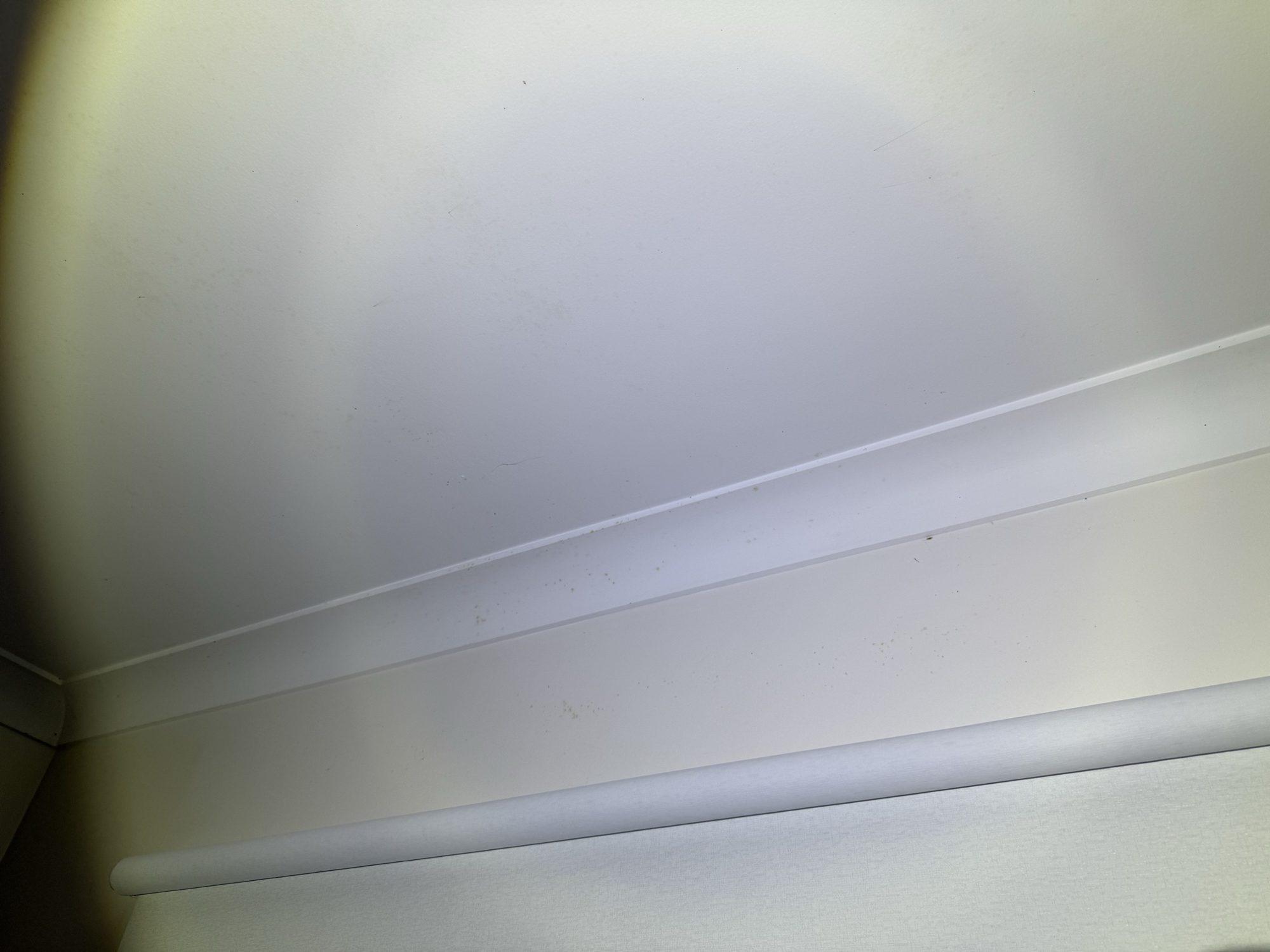
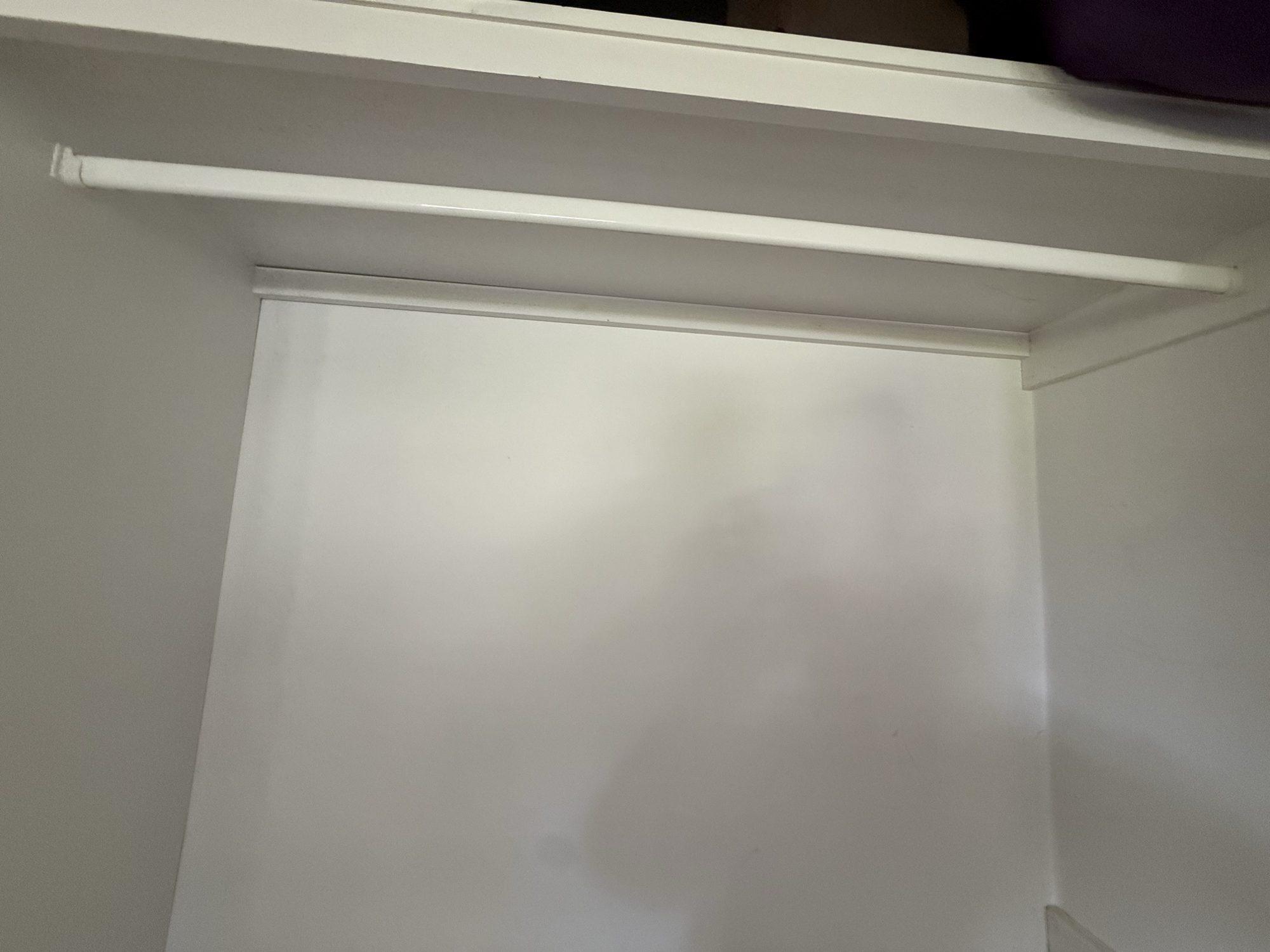
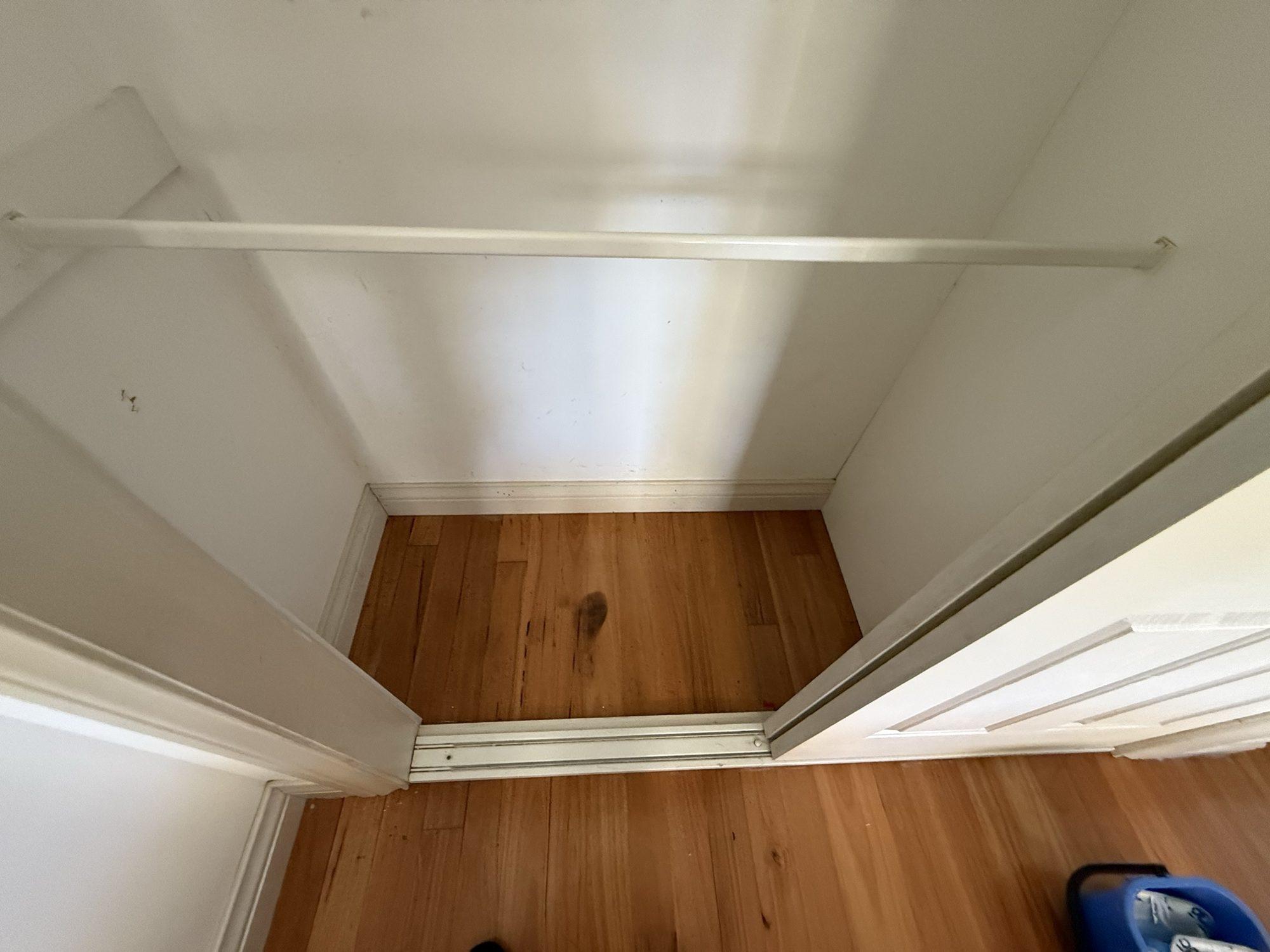
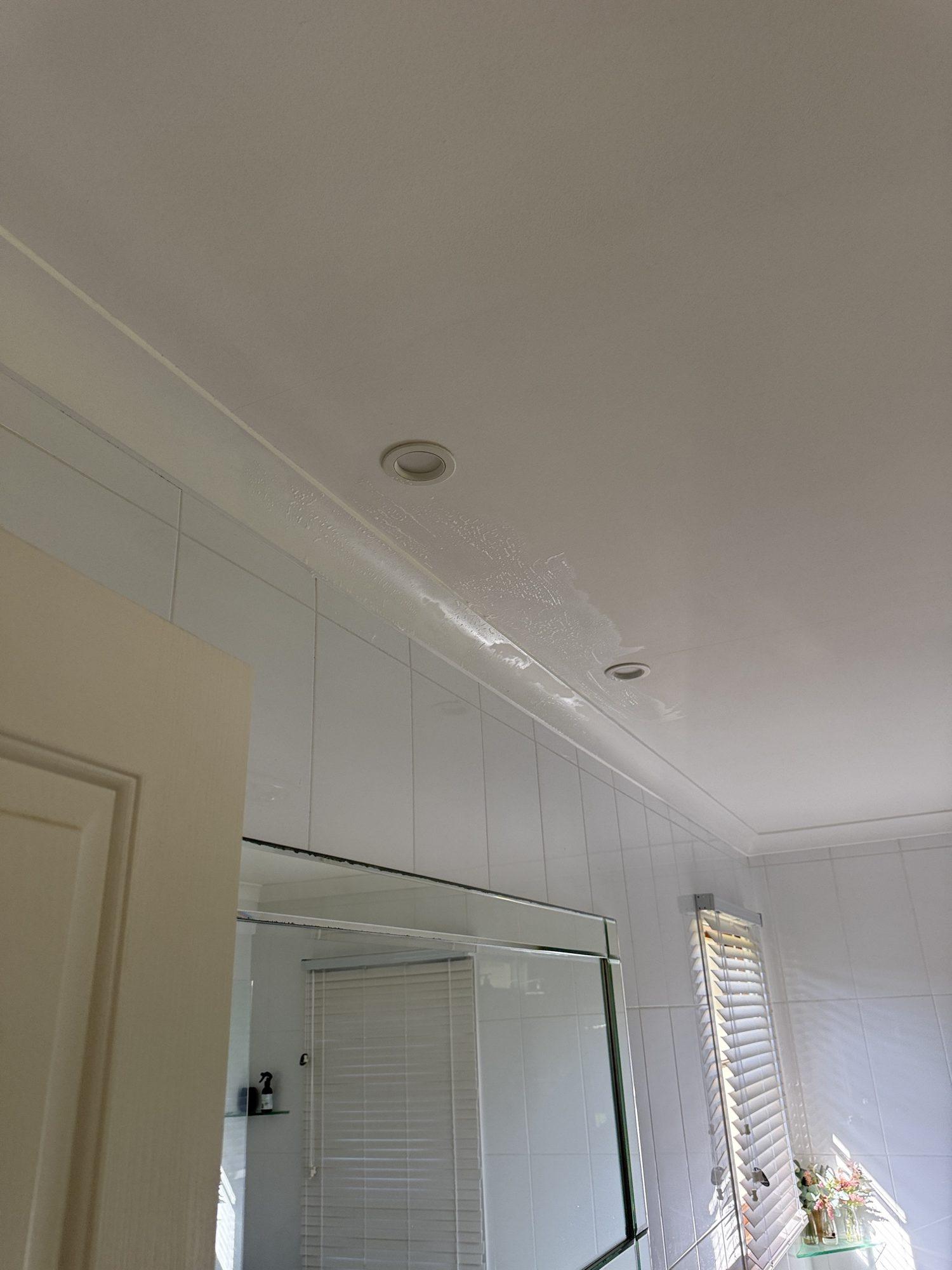
Mould in the Bathroom Ceiling, the Wardrobes and the Laundry — What the Pattern Tells You
Where mould grows tells you what is feeding it. Three patterns come up on almost every Sydney job:
Mould on the bathroom ceiling. Usually condensation: warm, wet air meeting a cold ceiling every morning. An exhaust fan that actually vents outside, run for twenty minutes after a shower, fixes most of it. When the fan is new and the ceiling is still wet to the meter, it is not condensation. Something is leaking onto that ceiling from the other side.
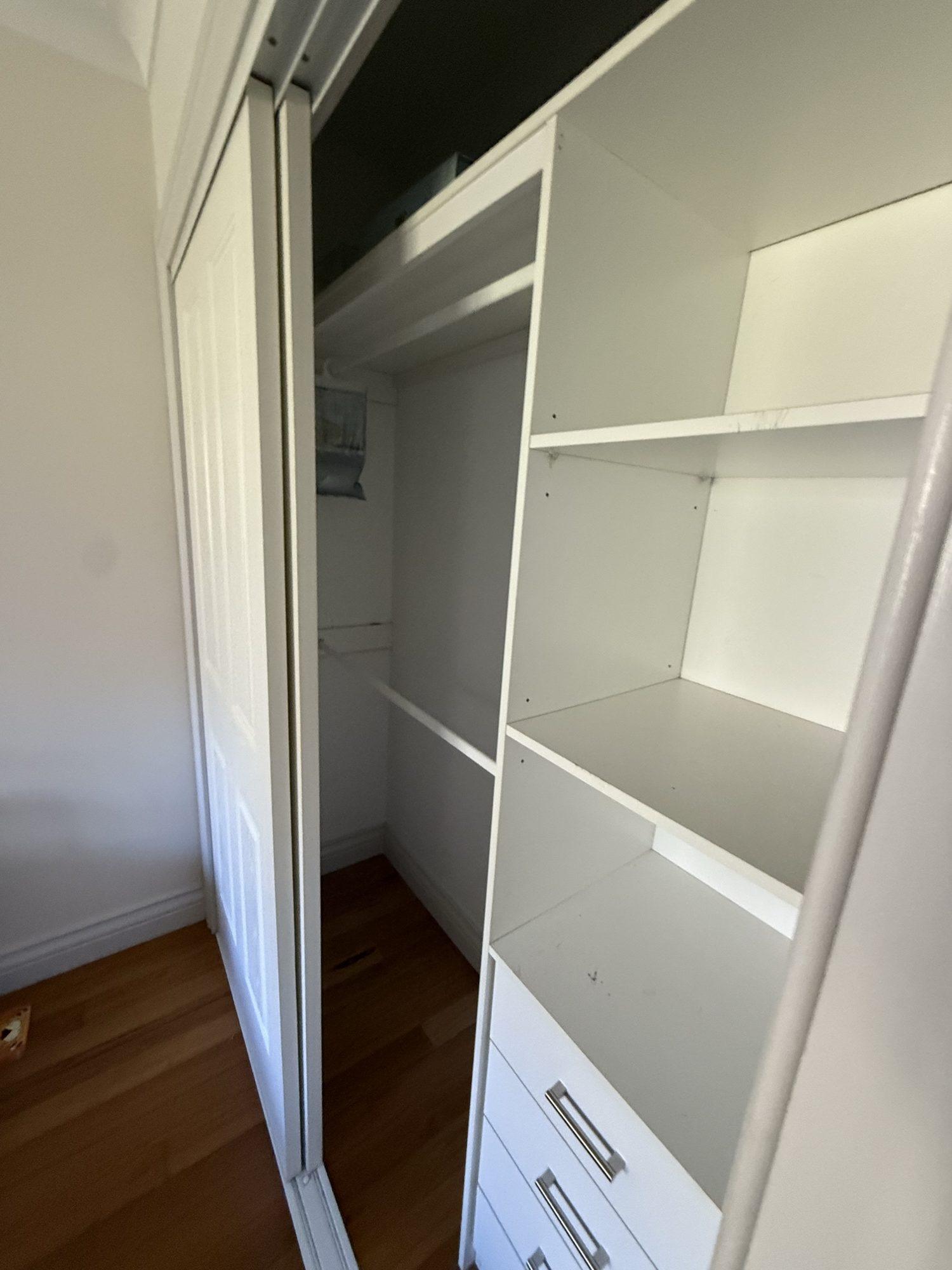
Mould in the wardrobes. Closed doors, no airflow, a wall of fabric that holds moisture. It shows first on the top shelf and the wardrobe ceiling when the moisture is coming down from the roof space, and low on the back wall when the wardrobe sits against a cold external wall. The height of the growth is the clue.
Mould under the vanity and the laundry bench. Trapped air behind cabinetry, plus whatever is dripping in there — a slow plumbing leak, a splashback that is not sealed, or water tracking down the wall from above and pooling at the lowest point it can reach.
Read the pattern before you open a wall, and you usually know where the water is coming from before anyone lifts a tile.
Mouldy Plasterboard: Clean It or Replace It?
Plasterboard is paper on both faces of a gypsum core. Surface spotting on paint — the kind that wipes off and leaves a clean board behind — can be treated. Once the board has been wet long enough for mould to grow through the paper, it is soft, stained, sometimes bubbling, and it does not come clean. It gets cut out and replaced, and the cavity behind it gets dried and treated before the new sheet goes on.
One more thing worth knowing in any Sydney house built before 1990: wet-area linings and fibro sheeting can be asbestos cement. If a bathroom wall has to come out, that is a job for a licensed asbestos removalist, not a mould cleaner — and if you are not sure what the sheet is, asbestos testing from $200 settles it before anyone cuts. We hold a SafeWork NSW Class B licence, so on a job like this the same crew handles both.
How the Remediation Ran
One day on site. Wardrobes emptied and the contents set aside, floors protected. HEPA vacuuming of every affected surface, an antimicrobial treatment, then dry-fogging of the rooms so the treatment reached inside the wardrobes, behind the cabinetry and into the corners a cloth never touches. The spaces under the vanity and the laundry bench were cleared and treated separately.
Then the advice that actually matters, given plainly: get the roof and gutters looked at. Treatment holds for as long as the building stays dry. If the water keeps coming in, we will be back next winter, and so will the mould.
What It Cost
A whole-house treatment like this one — several rooms, wardrobes, a bathroom and a laundry, with moisture mapping and dry-fog — typically lands between $2,000 and $3,500 in Sydney. Single rooms and bathroom ceilings are usually $700 to $1,500, and you get a written fixed price from your photos before anyone comes out.
The expensive version of this job is the one where nobody finds the leak: linings replaced, contents ruined, the same rooms treated twice.
If You Rent: Mould in a Rental Property in NSW
A lot of the calls we get about returning mould come from tenants, and a fair few from landlords and property managers on the other side of the same conversation. In NSW the landlord is responsible for keeping the premises in reasonable repair — a leaking roof, failed flashing or a plumbing leak is theirs to fix — and the tenant is responsible for ventilating the home and reporting mould promptly. What both sides usually lack is evidence.
A moisture-mapped inspection report gives everyone the same facts: where it is wet, how wet, and the most likely reason. We do those for tenants, owners, agents and strata committees, and the report is written so it can be acted on.
Lessons From This Job
1. Ventilation fixes condensation. It does not fix a leak. Fans and subfloor vents are worth having. They are not a treatment for water that is coming through the roof.
2. Read the pattern before you buy the product. High on the wall, top shelves, cornices and ceilings — look up. Skirtings and the bottom of the wall — look down.
3. The meter beats the eye. Dry-looking tiles reading 100 is the fact that changed this job. You cannot see moisture inside a wall; you can measure it.
4. Clean, treat, and fix the water — in that order it is permanent. Miss the last step and you are back where you started, minus the cost of the first two.
Mould Keeps Coming Back?
Send us photos of what you are seeing and we will tell you straight whether it is a surface job or a moisture problem — and give you a written fixed price either way. If it needs an inspection, we map the moisture first and treat second. Start here, or call the number at the top of the page.
Related services
How HazWreck Can Help
Planning a project?
One Contractor, From Hazardous Materials to Handover
Call before the project starts — one conversation at planning stage can save weeks on programme.