
From the Site #013
A Collapsed Trench, a Five-Day Clock and an Asbestos-Coated Water Main at Sydney Airport
A hangar project in the airport precinct, an old 200mm water main with an asbestos coating, and a head contractor with trades booked back-to-back. Then it rained overnight and the trench caved in. What happened next is why builders keep our number.
Buried Asbestos: The Pipe Nobody Can See Until the Dig Starts
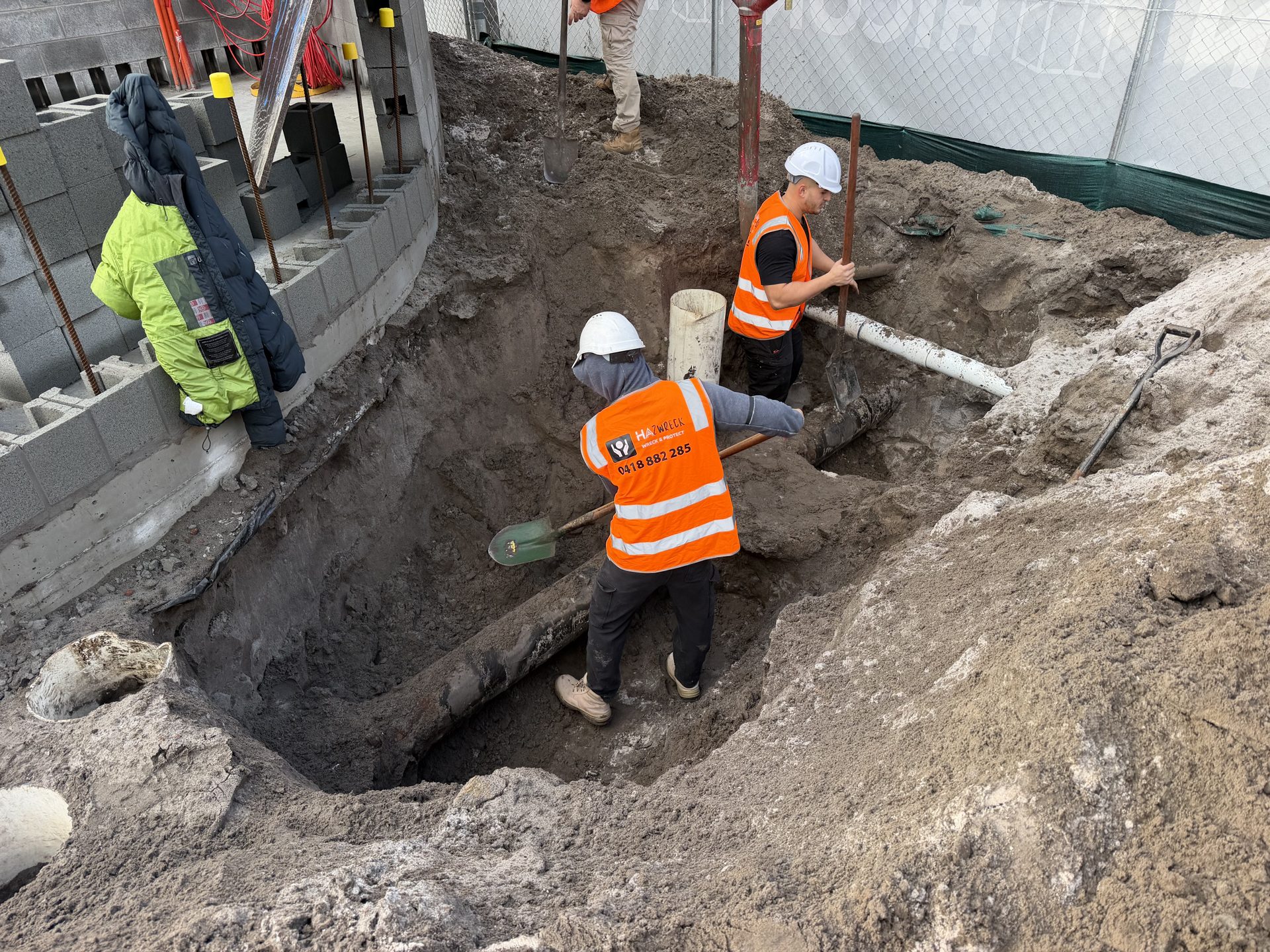
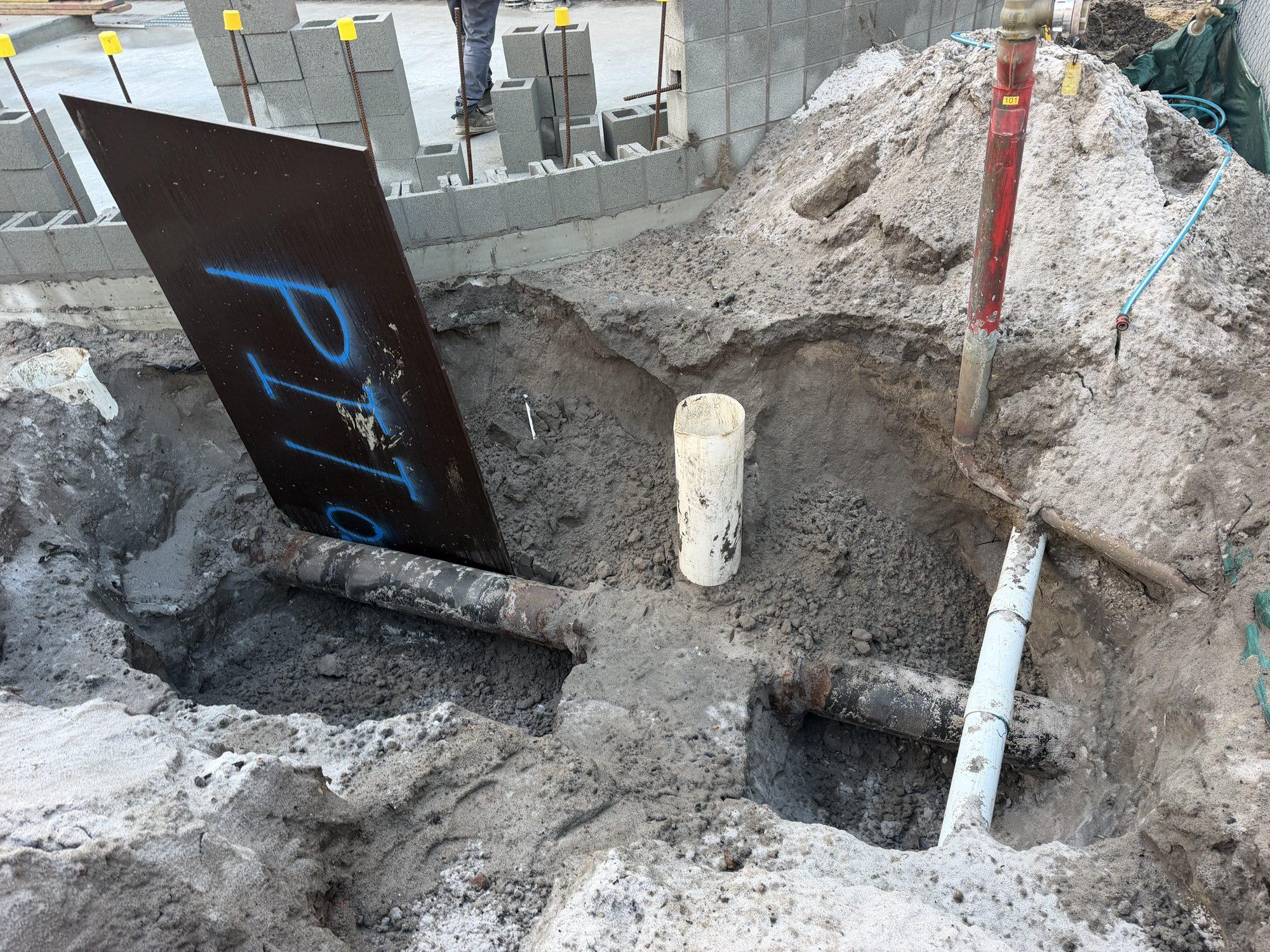
Sydney’s older industrial precincts are full of services that pre-date anyone’s drawings — and around the airport, some of the oldest infrastructure in the city is still in the ground. When an excavation on a hangar project exposed an old 200mm water main, its wrapping told the story: a bituminous coating of the kind used for decades to protect steel pipe, and of the kind that very often carries chrysotile asbestos bound into the bitumen.
That puts it squarely in licensed-removal territory. Bonded, non-friable material is Class B work — our licensed specialty — but a weathered coating that is cracking and flaking is exactly where Class B can start drifting towards the Class A line. So before a crew was ever committed, the exposed pipe was assessed against that line off photos and an inspection, and the scope was written for what the material actually was: bonded coating, hand tools only, full controls. It’s not our first job inside the airport fence either — the hangar door removal was a few sheds down.
Six Days’ Notice, and a Form 65 Clock That Runs on Calendar Days
We had priced this job weeks earlier and the head contractor was waiting on their own program to firm up. Then the call came: works needed to happen in six days.
Here is the arithmetic every builder should know. Licensed removal of this kind has to be notified to SafeWork NSW on a Form 65 at least five calendar days before work starts — calendar days, not working days. Six days’ notice leaves exactly one day of slack. The notification went in the same day the go-ahead landed, which is the only version of that timeline that works. Sit on the paperwork for a weekend and the program is gone before a tool comes off the truck.
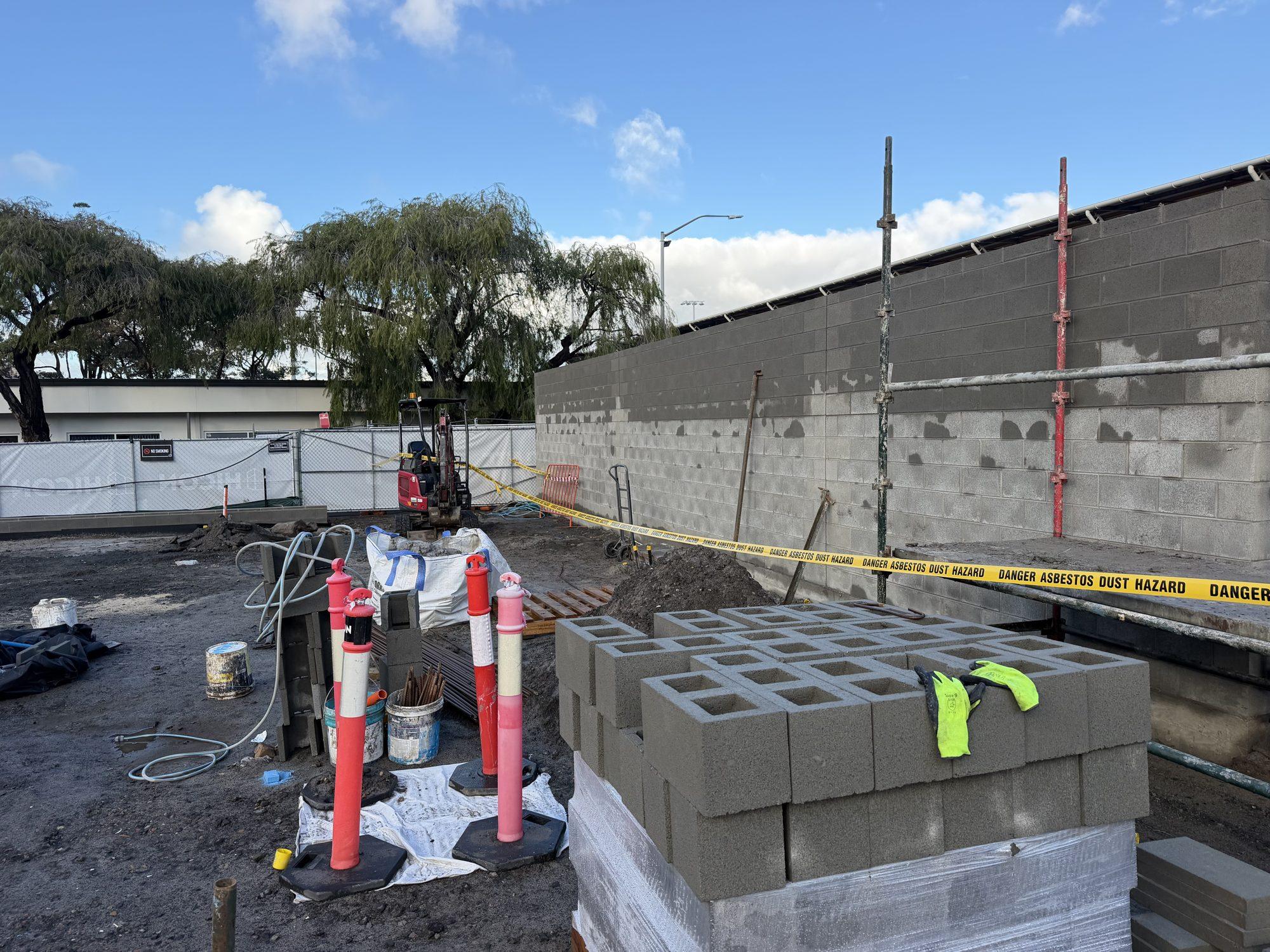
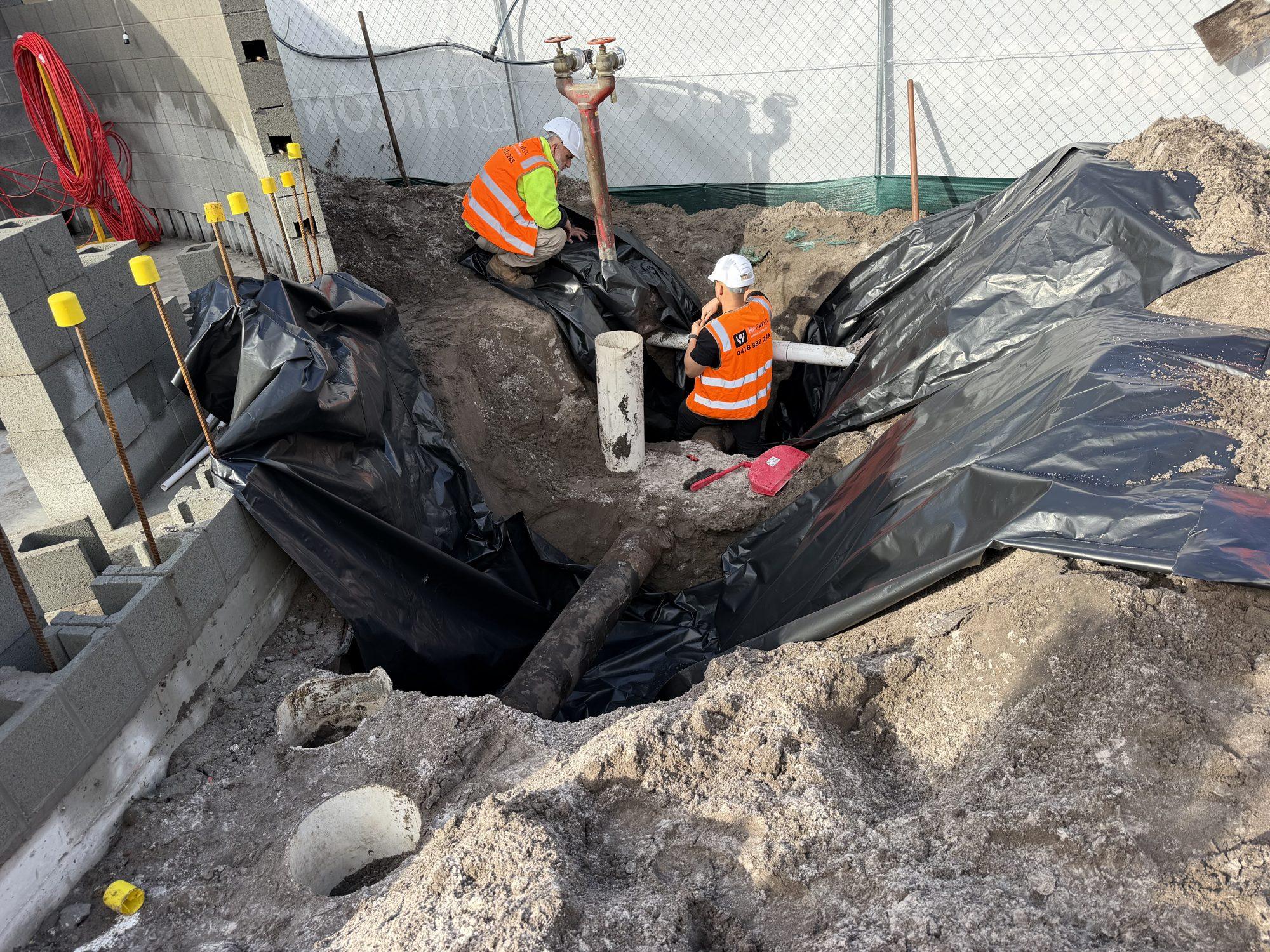
The other thing that happened on that call: we told the head contractor exactly what the site needed to look like when we arrived — area cleared, and the trench opened up with 1.5 metres of clearance around the pipe on every side, so the crew could work the coating with proper access instead of reaching into a slot. They set it up exactly to spec. That’s what a good head contractor does, and it’s why the next part of this story didn’t end the program.
The Night It Rained
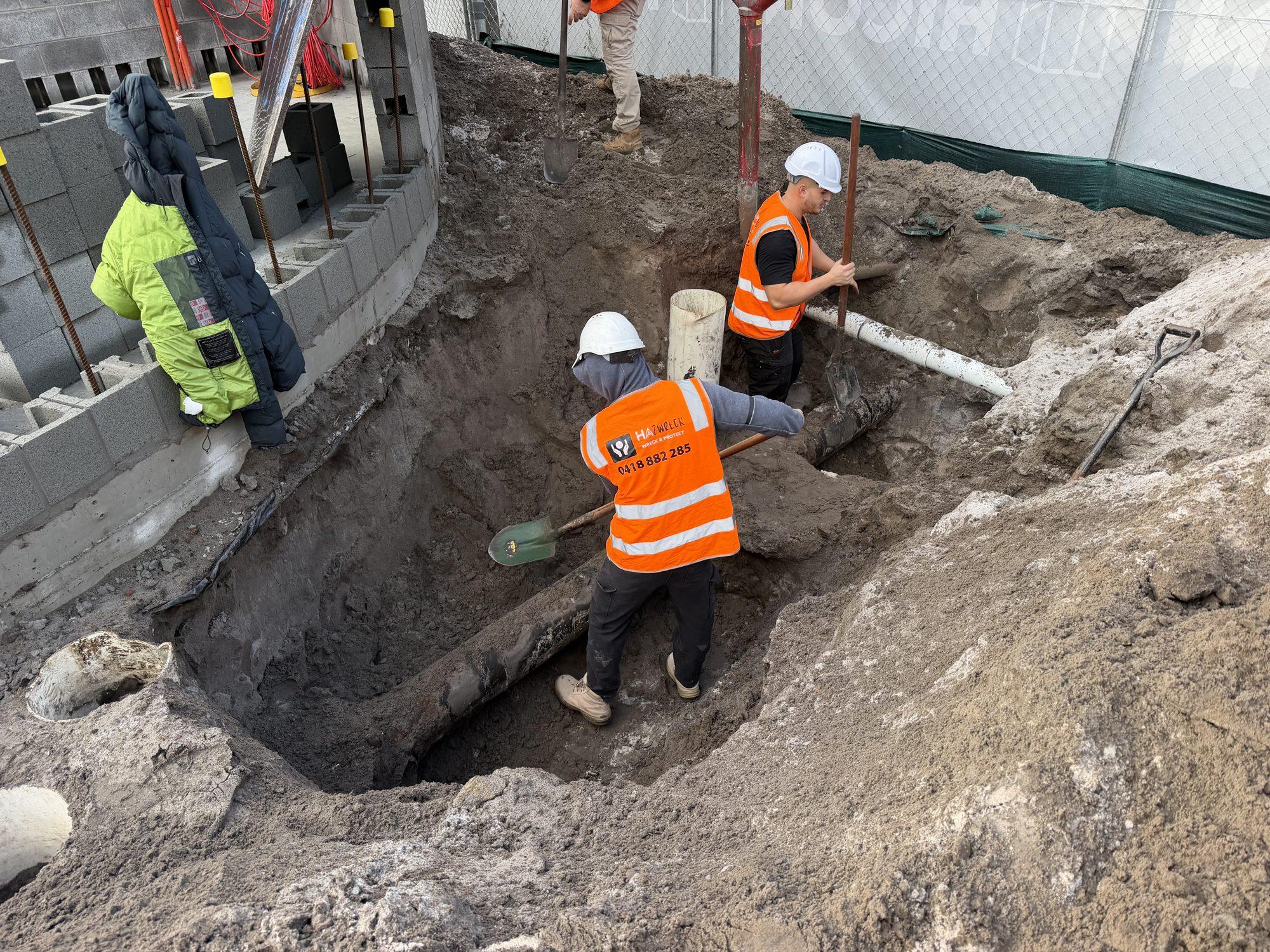
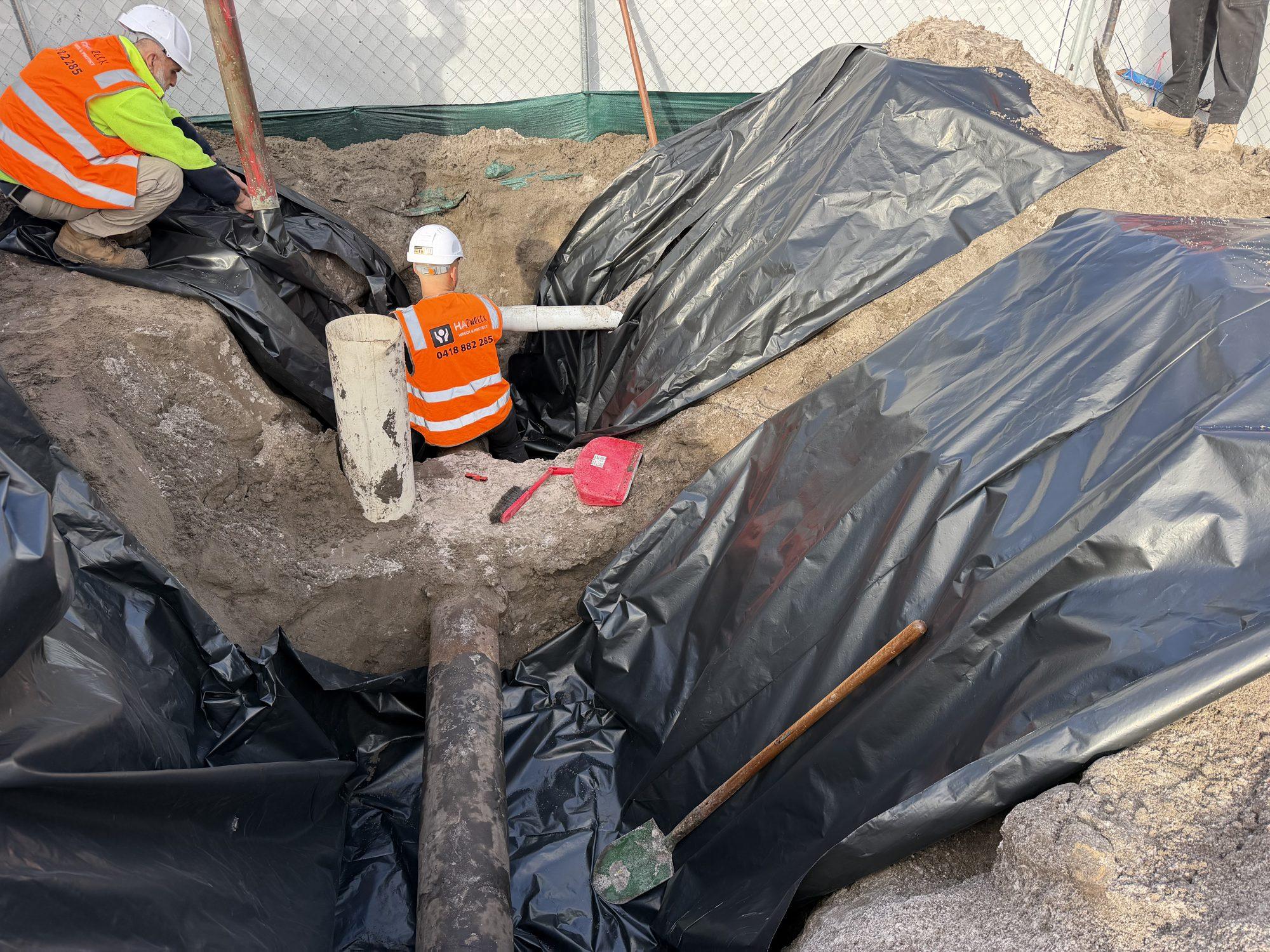
The evening before works, it rained hard. Overnight, the prepared trench collapsed in on itself — walls slumped, spoil back around the pipe, the careful 1.5 metres gone.
Here’s the thing: excavation collapse was already sitting on our hazard register for this job, written down before it happened. So when the crew arrived at first light to a caved-in trench, nobody had to invent a response. The controls were already thought through, the call was quick, and it was this: we don’t stop.
Most trades, with the site prep washed away, would have stood down, lodged a variation for the re-excavation, and handed the program problem back to the builder — with following trades booked in back-to-back behind us, that’s days of slippage, real money and a bruise on the head contractor’s name with their client. Instead, the crew got in the trench and dug it back out by hand, restored the clearance, and ran the removal the same day.
Removal, Air Monitoring, Clearance — All on the Same Day
The removal itself ran exactly as scoped: the coating stripped from the main by hand, straight into wrapping — double-wrapped, labelled, and off to an EPA-licensed facility with a disposal docket to close the loop. No power tools, no dry cutting, the excavation lined so nothing left the zone.
Because this was a live construction site with other trades waiting on the space, the job also carried independent air monitoring through the works and an independent hygienist clearance at the end — an independent set of eyes confirming the area was clean before anyone else stepped into it. That paperwork went to the head contractor the same day. Their next trades started on time, on the program they’d promised their client.
What a Job Like This Costs
This one came in a little over $4,000 — and roughly a thousand of that was the independent air monitoring and hygienist clearance, which is money a builder should want on the invoice, because it’s the line that protects their program and their compliance file. Small scope doesn’t mean small stakes: the licensed removal, the Form 65, the controls and the paperwork are the same discipline at 2 lineal metres as at 200.
What moves the price on buried-services work is access, how much digging and lining the excavation needs, the monitoring and clearance scope, and disposal. Our asbestos removal cost guide covers the ranges — but on head-contract work, the number that matters most is usually the one you don’t see: the cost of a stopped program.
Lessons From This Job
1. In pre-1990 precincts, assume buried services carry asbestos until tested. Bituminous pipe coatings, AC conduits, lagging on old mains — if your excavation finds a service the drawings didn’t show, stop and get it assessed before anyone touches it.
2. The Form 65 goes in the day you get the go. Five calendar days is the minimum, and weekends count against you. A removalist who sits on the notification has already spent your program.
3. Write the site prep into the scope — in metres. “Site to be cleared” is an argument. “1.5m clearance around the pipe on all sides” is a spec. Both sides knew exactly what ready meant, which is why recovery was fast when the weather undid it.
4. The hazards you write down are the ones you handle fast. Trench collapse was on the register before the rain came. When it happened, the response took minutes to decide — not a morning of phone calls.
Pricing Hazmat on a Live Program?
If you’re a builder or contract administrator with asbestos in the way of your program — buried, bonded or built-in — send us the photos and the dates. You’ll get a fixed price, the Form 65 lodged the day you say go, and a crew that treats your program like it’s ours. Because on the day it rains, it is.
Related services
How HazWreck Can Help
Planning a project?
One Contractor, From Hazardous Materials to Handover
Call before the project starts — one conversation at planning stage can save weeks on programme.