
From the Site #012
The Building Inspector Found It First: Asbestos Vinyl Under a Crows Nest Kitchen, Out in a Day
A vacant apartment in Crows Nest, a renovation waiting to start, and a kitchen floor the building inspector flagged as asbestos. How the job was quoted the same day it was referred, why the owners corporation held the start until it had seen our insurance and licence, and what a kitchen strip-out with an asbestos floor actually involves.
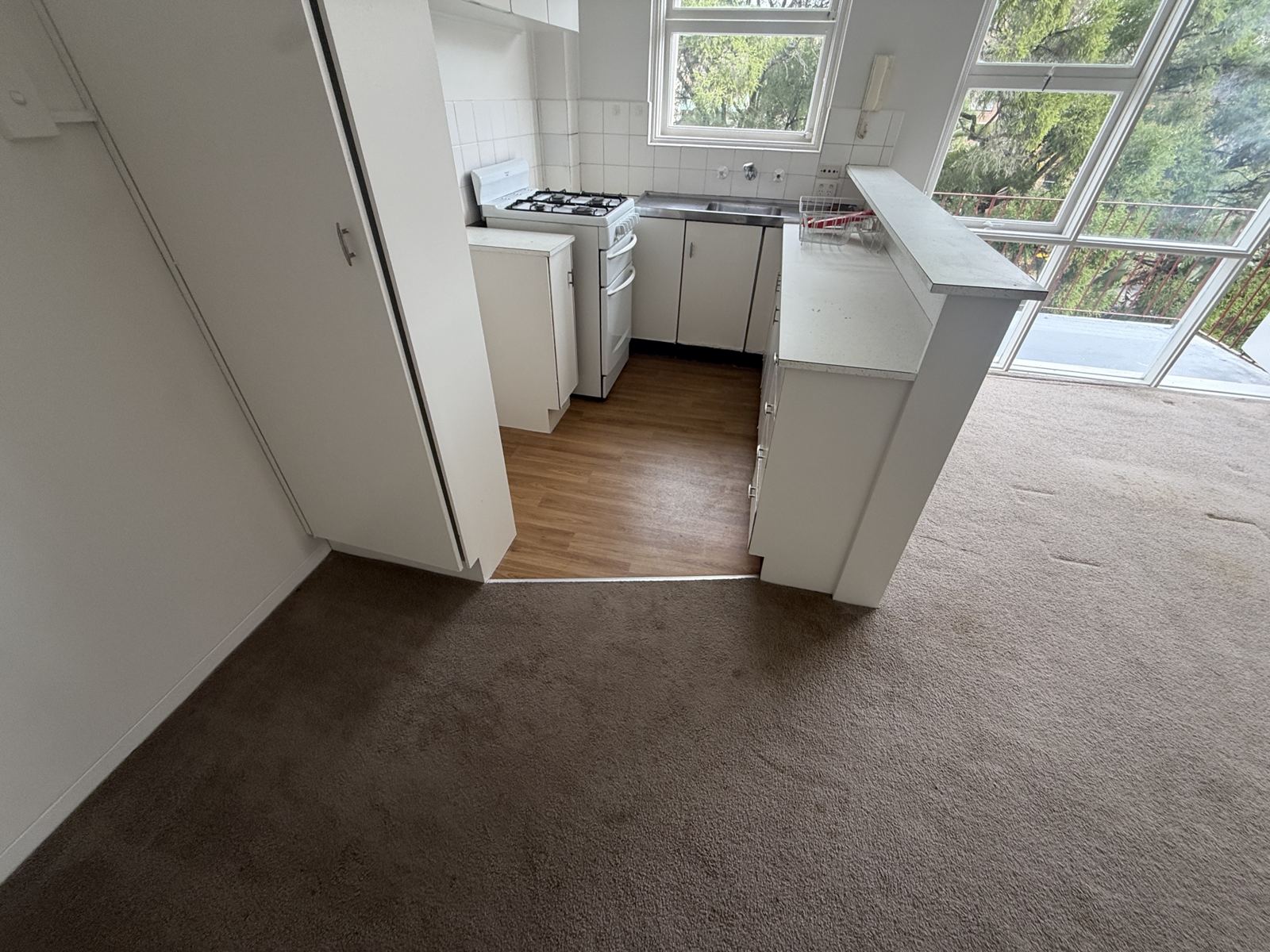
The Floor That Stopped a Renovation
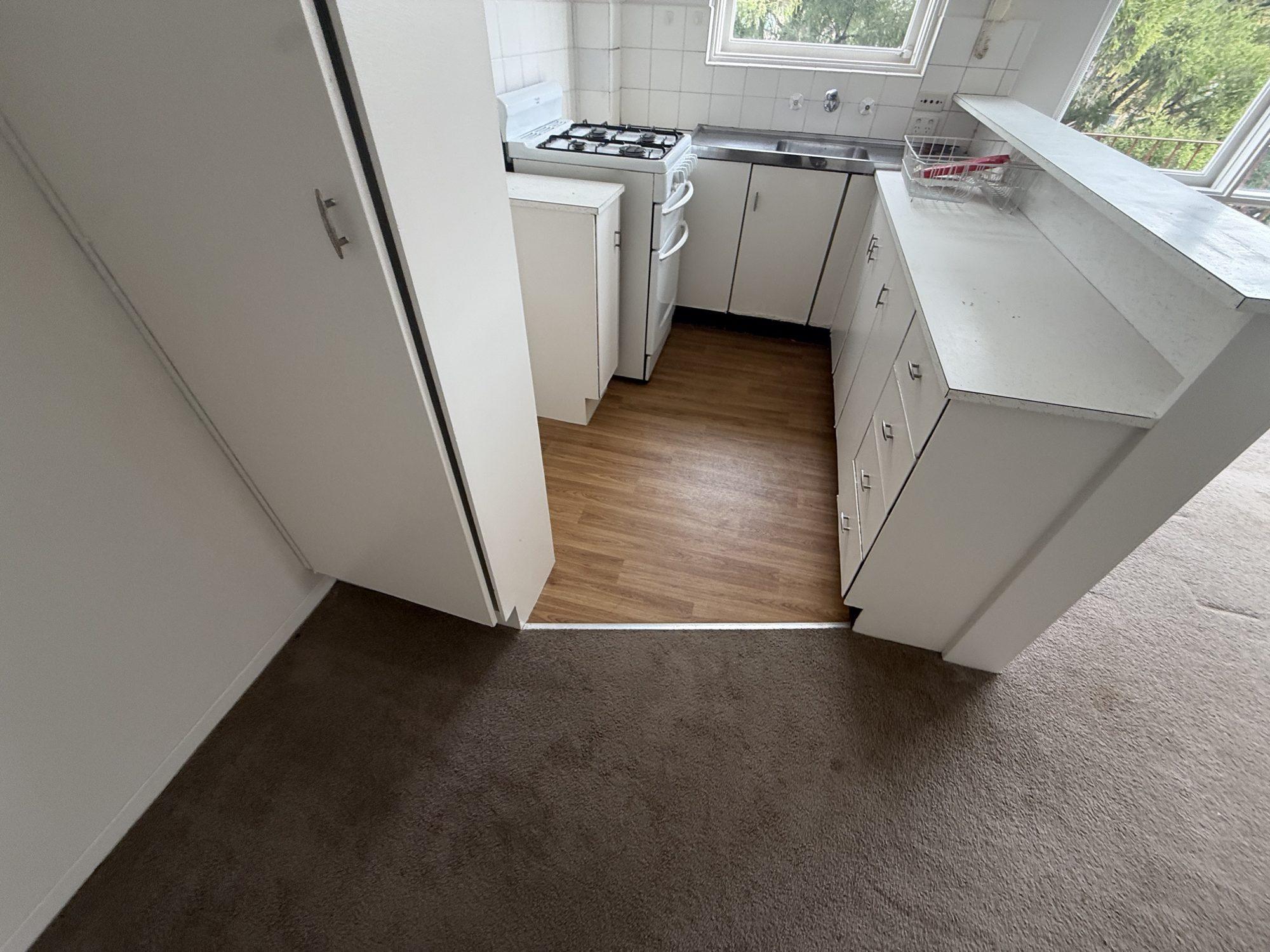
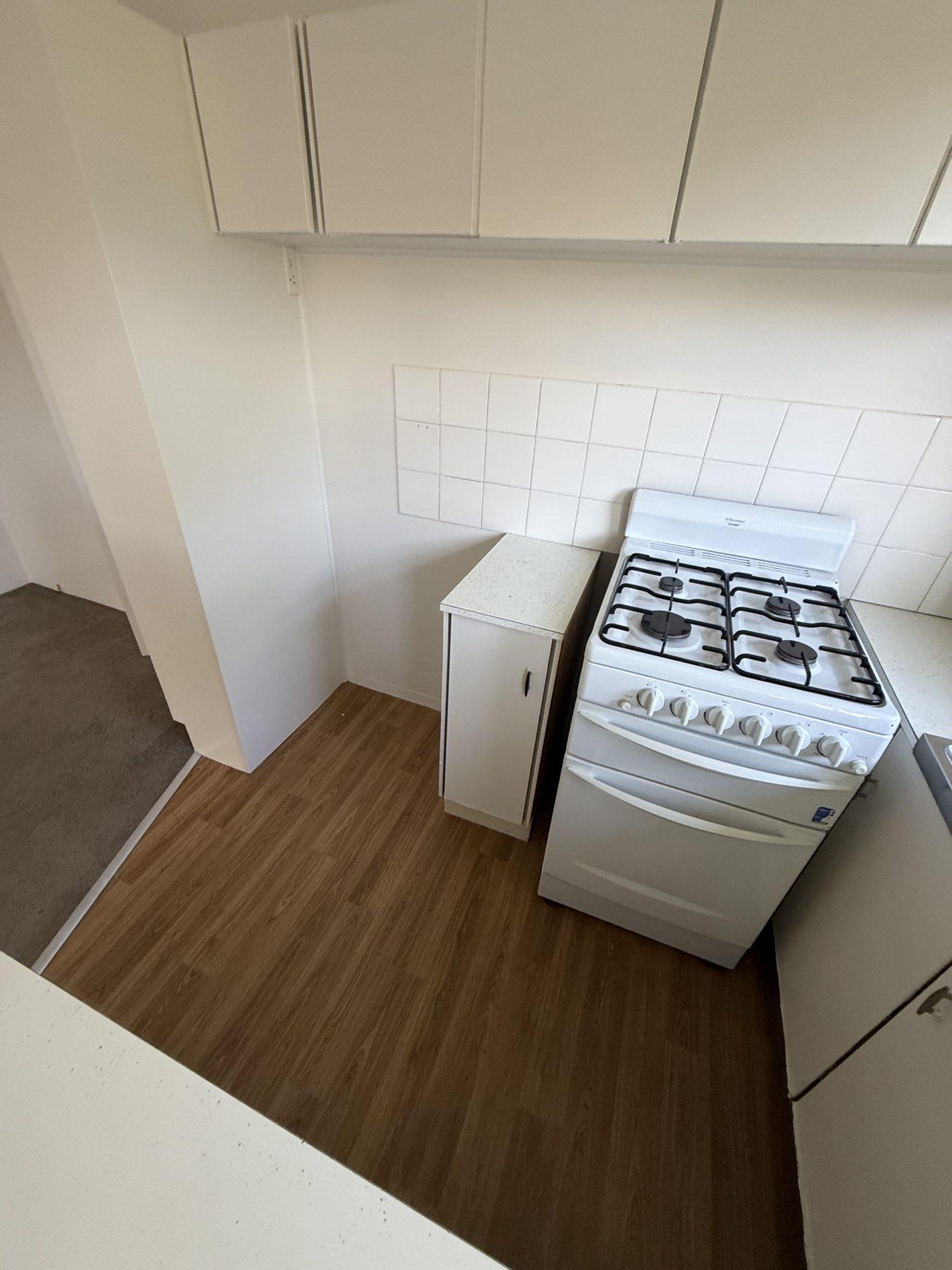
The apartment was empty, the renovation was planned, and the kitchen was the first thing to go. Then the building inspector walked through and flagged the kitchen floor: asbestos-containing vinyl, the kind laid in tens of thousands of Sydney units in the 1960s and 70s. A builder cannot rip that up. A licensed asbestos removalist has to.
The inspector referred the owner to us. The quote went out the same day, the site visit was the next morning, and the only thing that moved the start date after that was the owners corporation — for a good reason we will get to.
Asbestos Floor Tiles and Vinyl: How to Tell, and Why the Glue Matters Too
Asbestos in flooring comes in three forms, and the first two look completely ordinary.
Vinyl floor tiles — usually 9-inch or 12-inch squares, often in a marbled pattern, laid from the 1950s into the 1980s. The asbestos is in the tile itself.
Sheet vinyl and lino with a paper backing. The vinyl on top can be fine; the felt-like backing underneath is often asbestos, and it is the backing that tears and crumbles when the sheet is lifted.
The adhesive. Old black “cutback” mastic under tiles and sheet frequently contains asbestos in its own right. A floor where the tiles have already been removed but the black glue is still on the slab is not an asbestos-free floor.
You cannot tell any of this by eye, which is why “asbestos floor tiles — how to tell” is one of the most searched questions we see and why the honest answer is a NATA-accredited test: a small sample, lab results in days, from $200. In a pre-1990 unit with an original floor — or a newer floor laid over one — the working assumption until the test comes back is that it is asbestos.
When the Building Inspector Finds It First
This job came to us the right way round. A building inspector who knows what old vinyl looks like identified it before anyone had a crowbar in their hand, put it in writing, and pointed the owner to a licensed removalist. Compare that with the usual version — a demolition crew lifts the floor, someone asks “what’s this black stuff?”, and the renovation stops for a week while the site gets tested, notified and cleaned.
For a homeowner, the practical difference is that the asbestos became a line item in the renovation instead of an emergency in the middle of it. We quoted it the day it arrived, inspected it the next morning, and the owner had a fixed price before the kitchen joinery had been ordered. If you are buying or renovating a unit of that age, ask your building inspector specifically about the floors — and if they flag something, treat that referral as the start of the job, not a problem to solve later. It is the same principle we wrote up for a commercial site in The Asbestos They Didn’t Expect: the asbestos is rarely the expensive part, the stoppage is.
Strata Sign-Off: The Certificate of Currency and the Licence
In an apartment, the owner does not have the final say on who works in the building — the owners corporation does, and this one did its job properly. The start had been pencilled for a Monday. The strata manager wanted our certificate of currency and our Class B licence on file before confirming, so the work went on hold until they had both, and we did not convert the quote to a work order or lodge the Form 65 until strata said yes.
That is exactly what a scheme should do before letting asbestos work into a common building, and it is the question every unit owner should expect: is this contractor licensed for this material, and insured for this work, and can they prove it today? We provided both the same day they were asked for. Approval came through, the notification went in, and the crew was on site on the Wednesday — a two-day slip, not a two-week one. For the strata side of these jobs at scale, ten bathrooms in Elizabeth Bay shows the same sign-off working across a whole block.
Can You Just Cover Asbestos Floor Tiles?
It is a fair question and the searches show plenty of people asking it. Intact, bonded asbestos flooring that is not being disturbed can lawfully be left in place and covered — a floating floor over the top is a common and legitimate way to manage it, as long as nobody sands, grinds, drills or lifts it, and as long as it is recorded so the next owner or tradesperson knows.
The moment a renovation starts, that option usually disappears. Stripping a kitchen means removing joinery that is sitting on the floor, cutting around plumbing and services, and preparing a slab for new flooring — every one of which disturbs the material. Encapsulation is a strategy for a floor you are leaving alone. It is not a strategy for a kitchen you are demolishing, and it is not something a builder can “work around” on the day. Here, the owner was gutting the kitchen; removal was the only clean path.
Kitchen Demolition With an Asbestos Floor: How the Day Ran
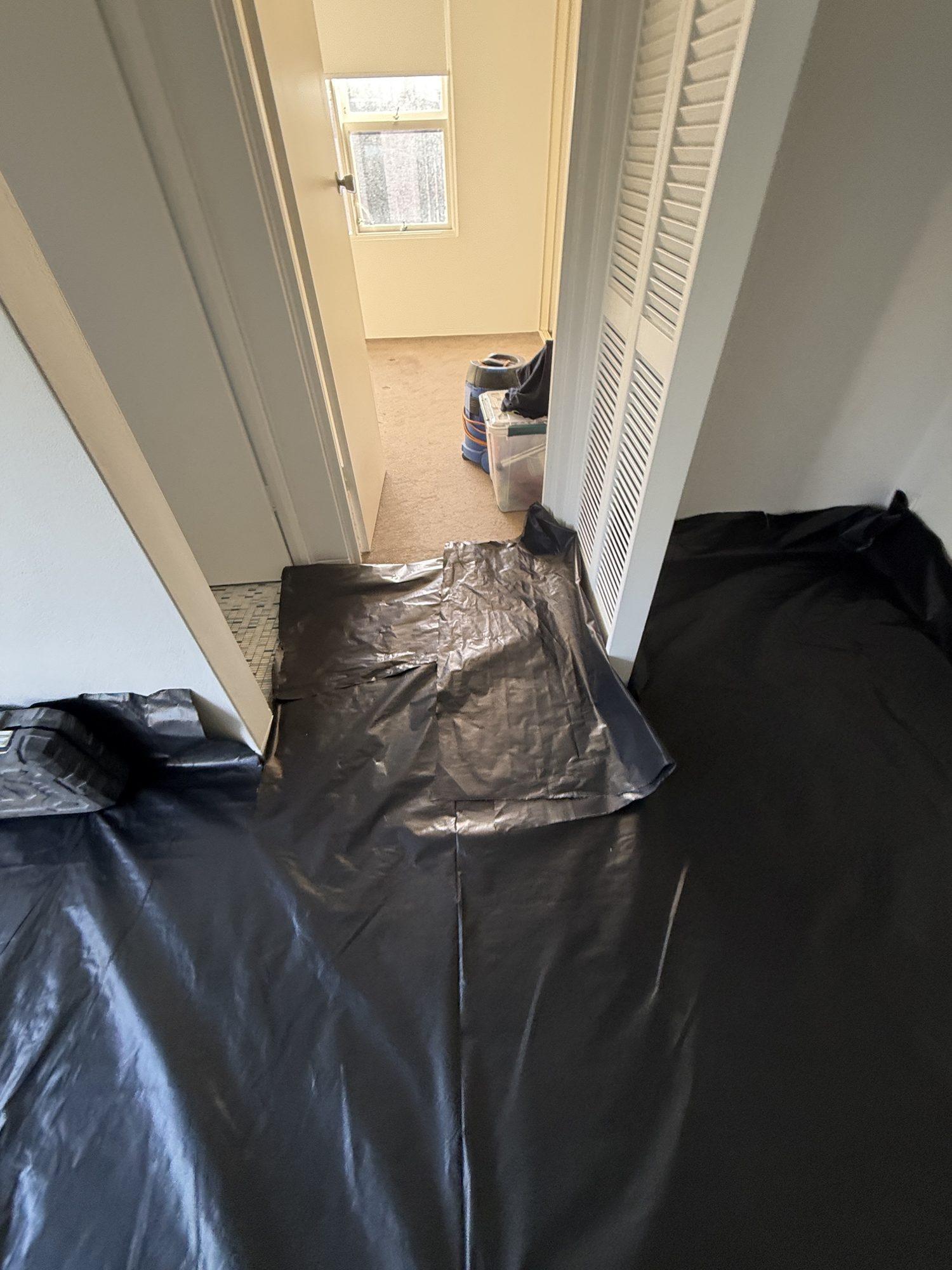
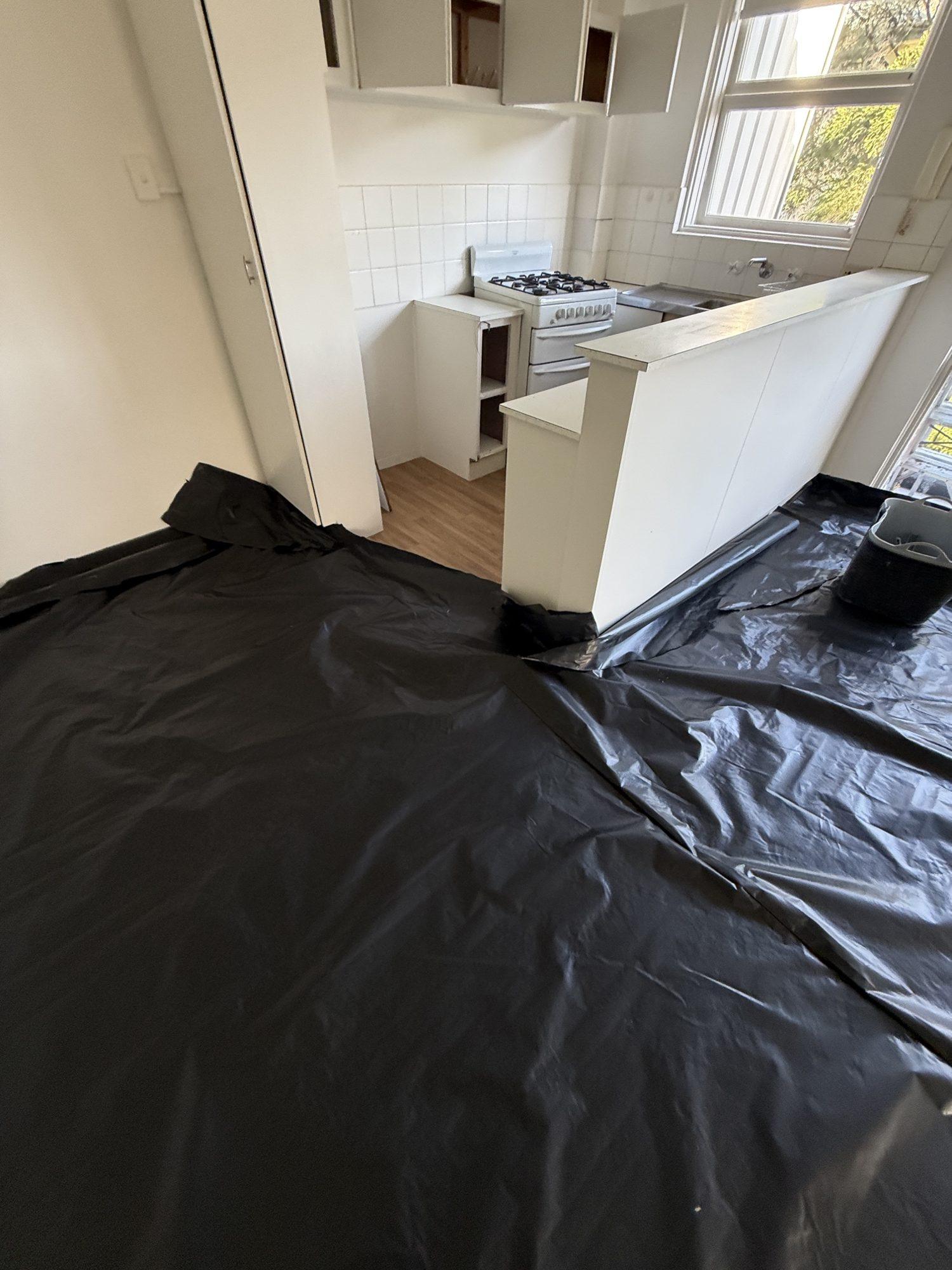
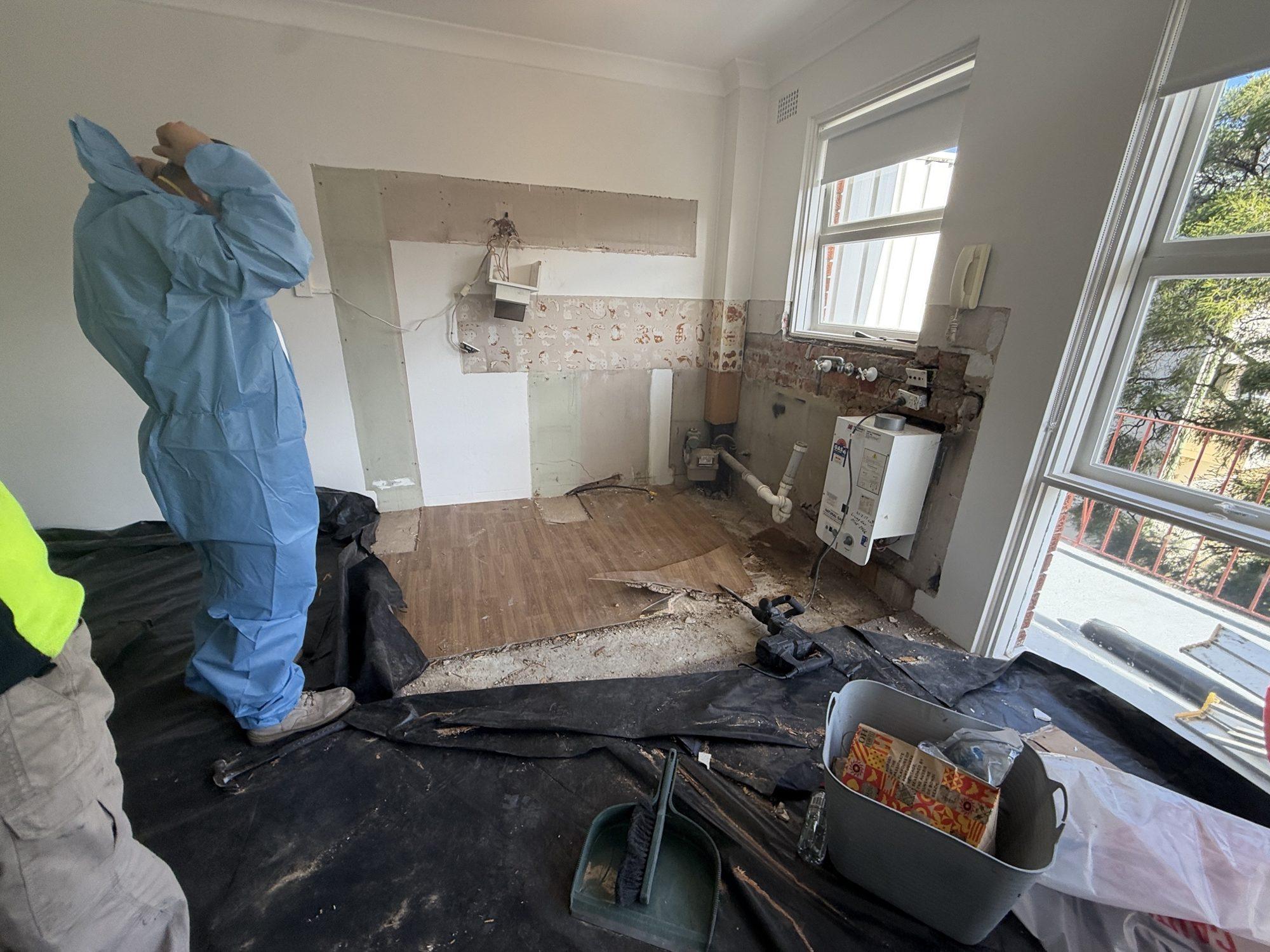
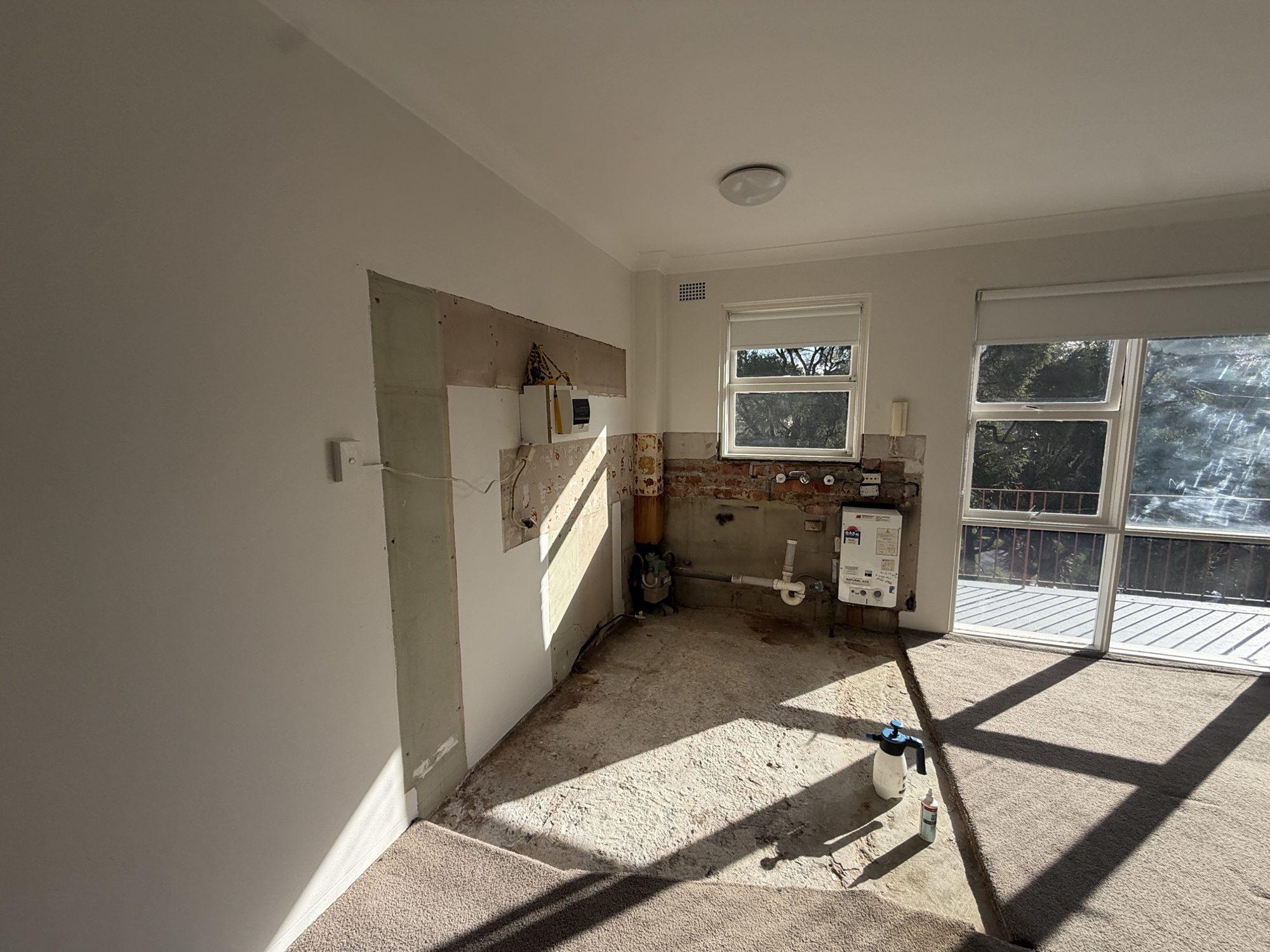
Three licensed removalists, one day. The route from the front door to the kitchen went under heavy plastic — the carpet in the living room was staying, and a strip-out that contaminates the rest of the unit defeats its own purpose. The joinery came out first, carefully, because the cabinets were sitting on the material we were there to remove. Then the floor: wetted down and lifted in the largest pieces it would come up in, the backing and adhesive scraped from the slab, every piece bagged and double-wrapped at the workface before it left the room.
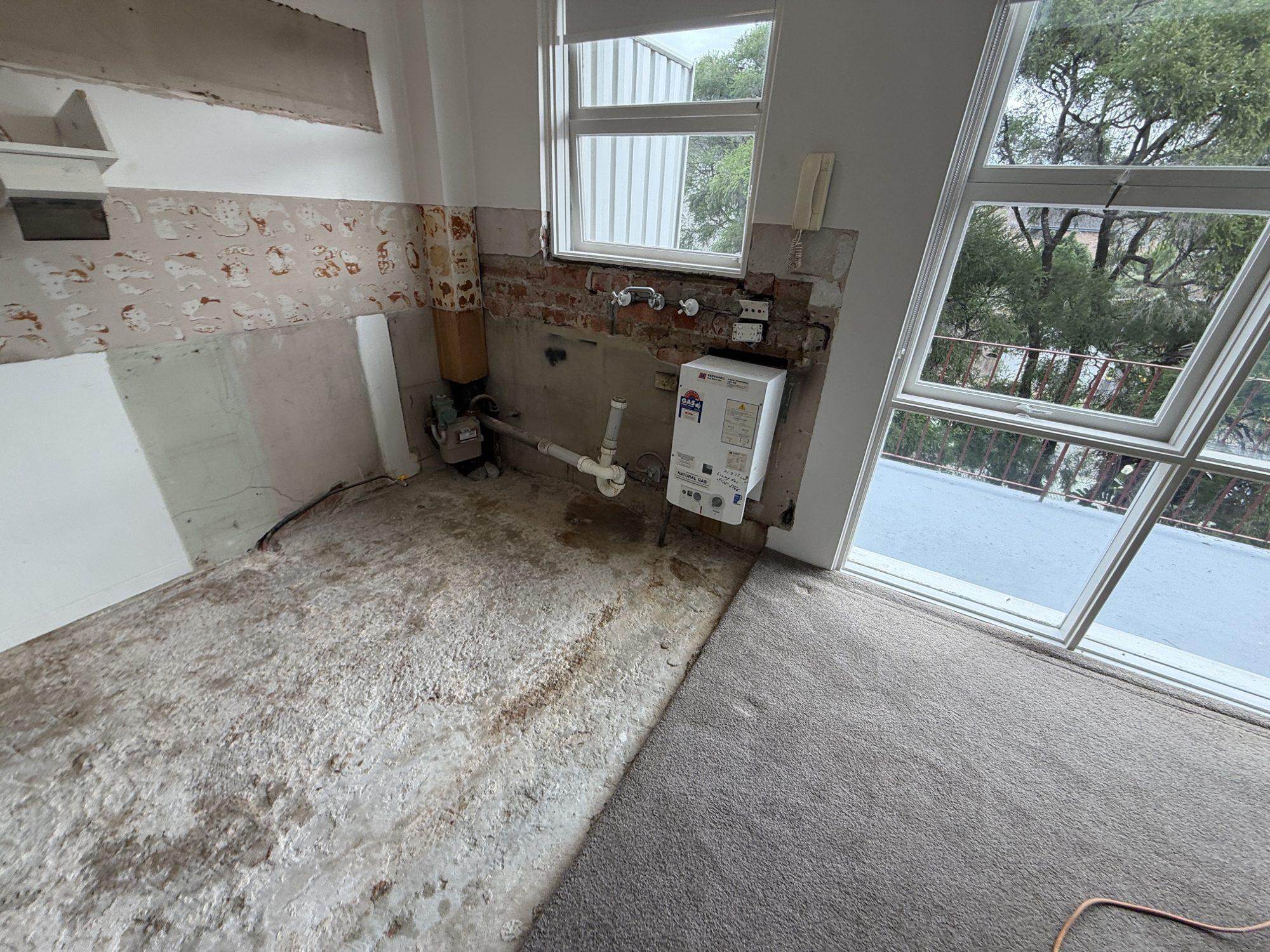
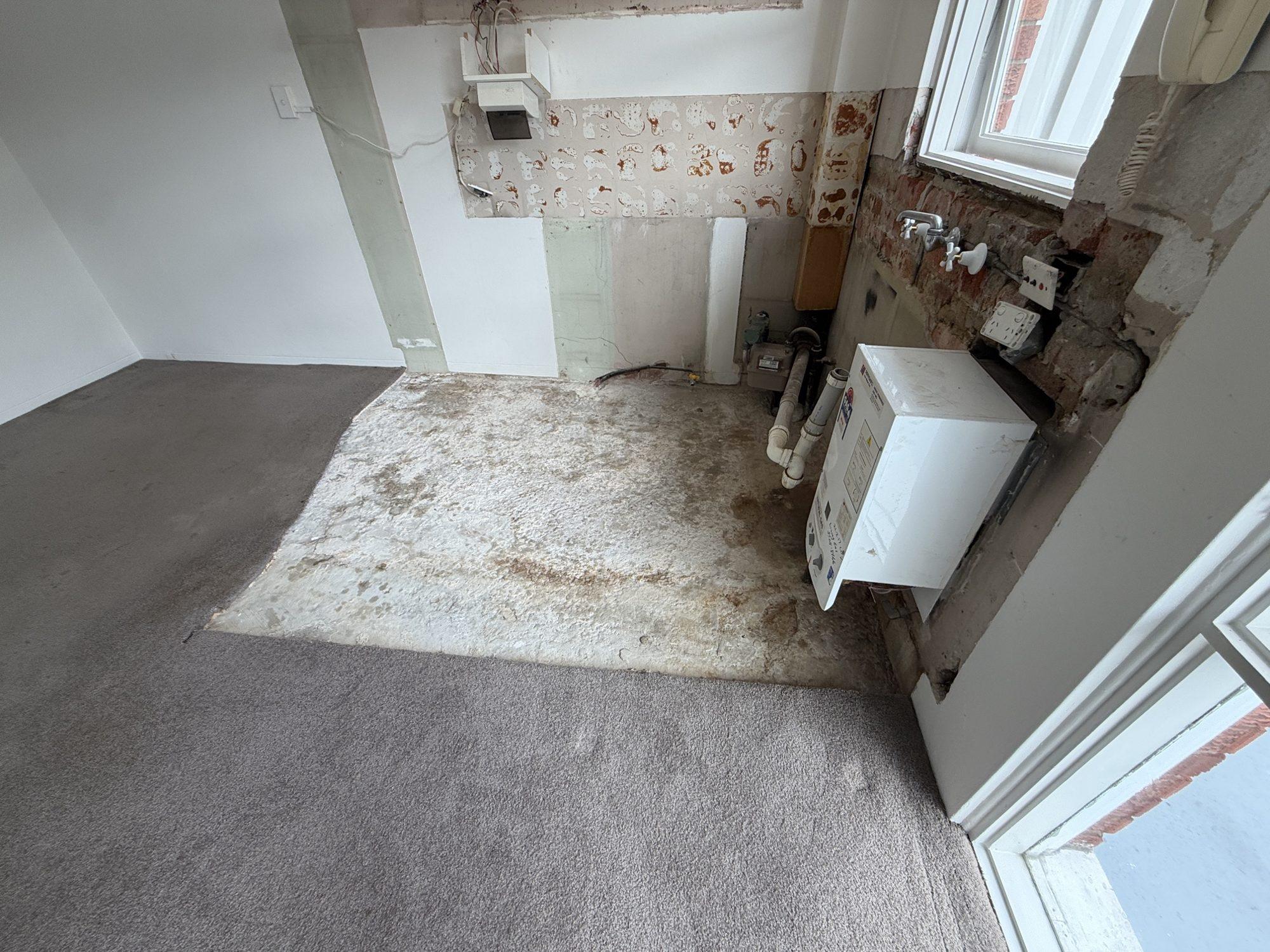
What was left was the honest version of an old kitchen: bare brick on the service wall, the plumbing stubs, and a clean slab ready for the renovation — with the vacuum run over every surface and the sheeting lifted last. The waste went to an EPA-licensed facility and the weighbridge docket sits on the job file. That piece of paper, together with the Form 65, is what proves the floor was removed lawfully, and it is what a buyer’s conveyancer will ask about one day. The full sequence of a removal day is laid out in what happens on asbestos removal day; the only thing a kitchen adds is the joinery.
Clearance: Whose Job Is It?
One thing to be clear about, because it was structured differently on this job. The independent clearance inspection was excluded from our scope: the owner chose to arrange it themselves before the renovation trades came in, and the quote said so in plain words. That is a legitimate way to run it. Our preference, and our advice, is the opposite — book the assessor as part of the removal so the clearance certificate lands the same day the crew leaves and nobody’s builder is waiting on a phone call. Whichever way you choose, make sure the quote says which it is. “Clearance” is the word that goes missing from cheap asbestos quotes, and it is the one the next trade needs.
What a Kitchen Strip-Out With Asbestos Flooring Costs in Sydney
A unit kitchen like this one — joinery and fixings out, asbestos vinyl, backing and adhesive off the slab, containment, wrapped disposal with dockets and the notification — typically lands between $2,500 and $4,000. A plain kitchen or bathroom strip-out without asbestos starts around $1,500; the asbestos floor roughly doubles the crew time and adds the disposal and paperwork. What moves the number is the floor area, how stubborn the adhesive is, whether the walls or splashback are also asbestos cement, and access — a third-floor walk-up costs more than a ground-floor unit with a driveway. The Sydney asbestos removal cost guide has the current ranges by job type.
Lessons From This Job
1. A floor that looks fine is not evidence. Tiles, sheet vinyl, lino backing and the black glue beneath them all carry asbestos in pre-1990 units. Test, or assume.
2. A referral from the inspector is the cheapest asbestos job you will ever have. It arrives as a line item with a fixed price instead of a stoppage with a variation.
3. Expect strata to ask for the certificate of currency and the licence. They are right to. A contractor who cannot produce both that day is the wrong contractor.
4. Covering is for floors you are leaving alone. Once you are stripping the kitchen, removal is the only path that does not contaminate the rest of the unit.
5. Read the word “clearance” in every quote. Included, excluded, or by others — it has to say which.
Renovating a Unit With an Old Floor?
Send us a photo of the floor and the kitchen, tell us the age of the block, and we will tell you straight whether it needs a test, a removal, or nothing. If it needs removal, you get a fixed price for the licensed asbestos work and the strip-out together, with the notification, the disposal and — if you want it — the clearance built in. If your building inspector has already flagged it, send us their note and we will quote from that the same day.
Planning a project?
One Contractor, From Hazardous Materials to Handover
Call before the project starts — one conversation at planning stage can save weeks on programme.