
From the Site #011
Asbestos in the Ceiling of Ten Apartment Bathrooms: Two Days, Every Resident Home the Same Night
A strata manager in Elizabeth Bay had a fire damper programme stalled by asbestos-cement ceiling panels in the bathrooms of an occupied mid-century block. How a four-unit quote became ten, why that made each bathroom cheaper, and how two mobilisations with a hygienist clearance after each put residents back in their homes the same evening.
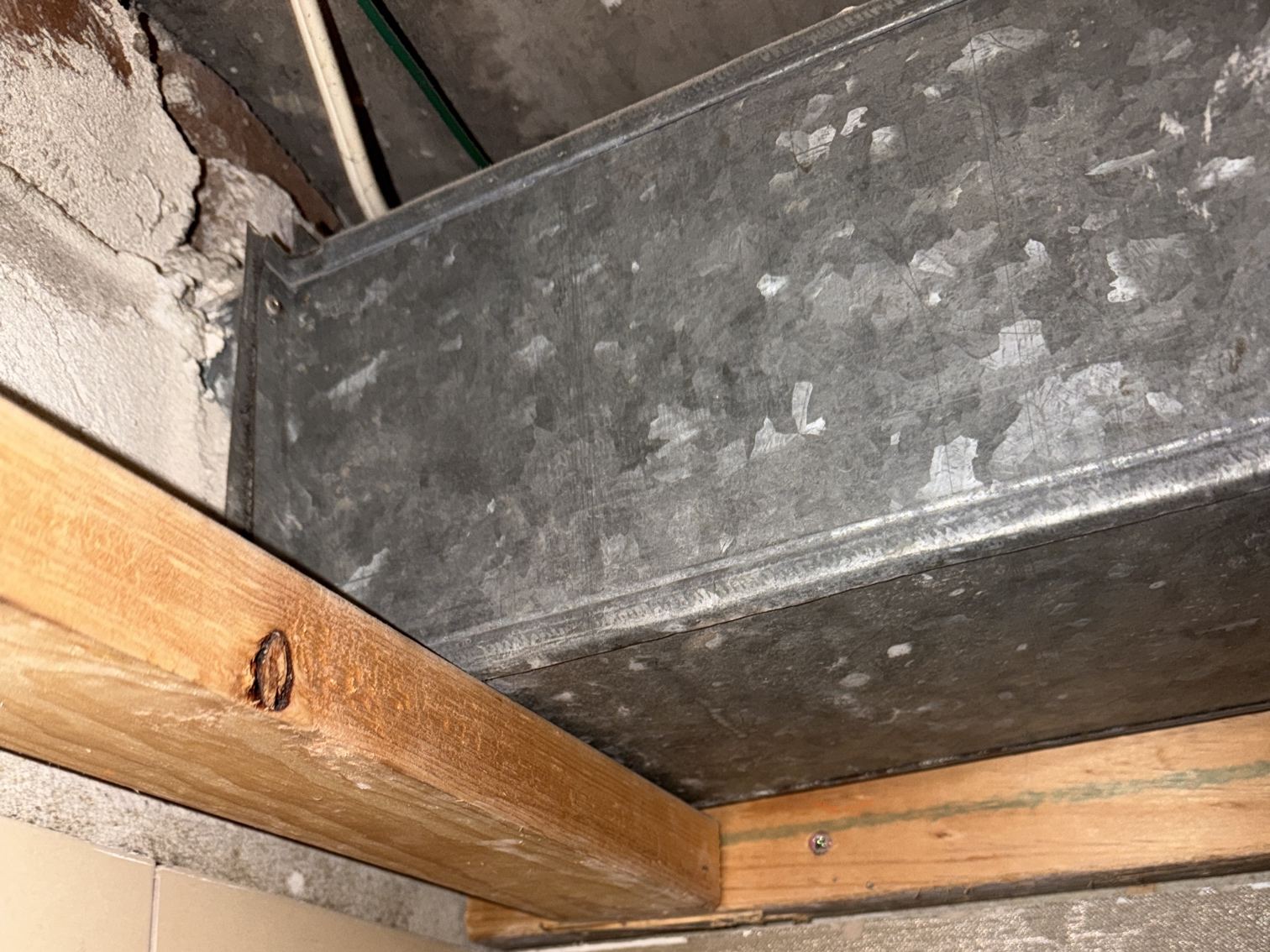
Ten Bathrooms, One Fire Damper Programme, and the Ceiling in the Way
The job did not start as an asbestos job. It started as a fire safety job.
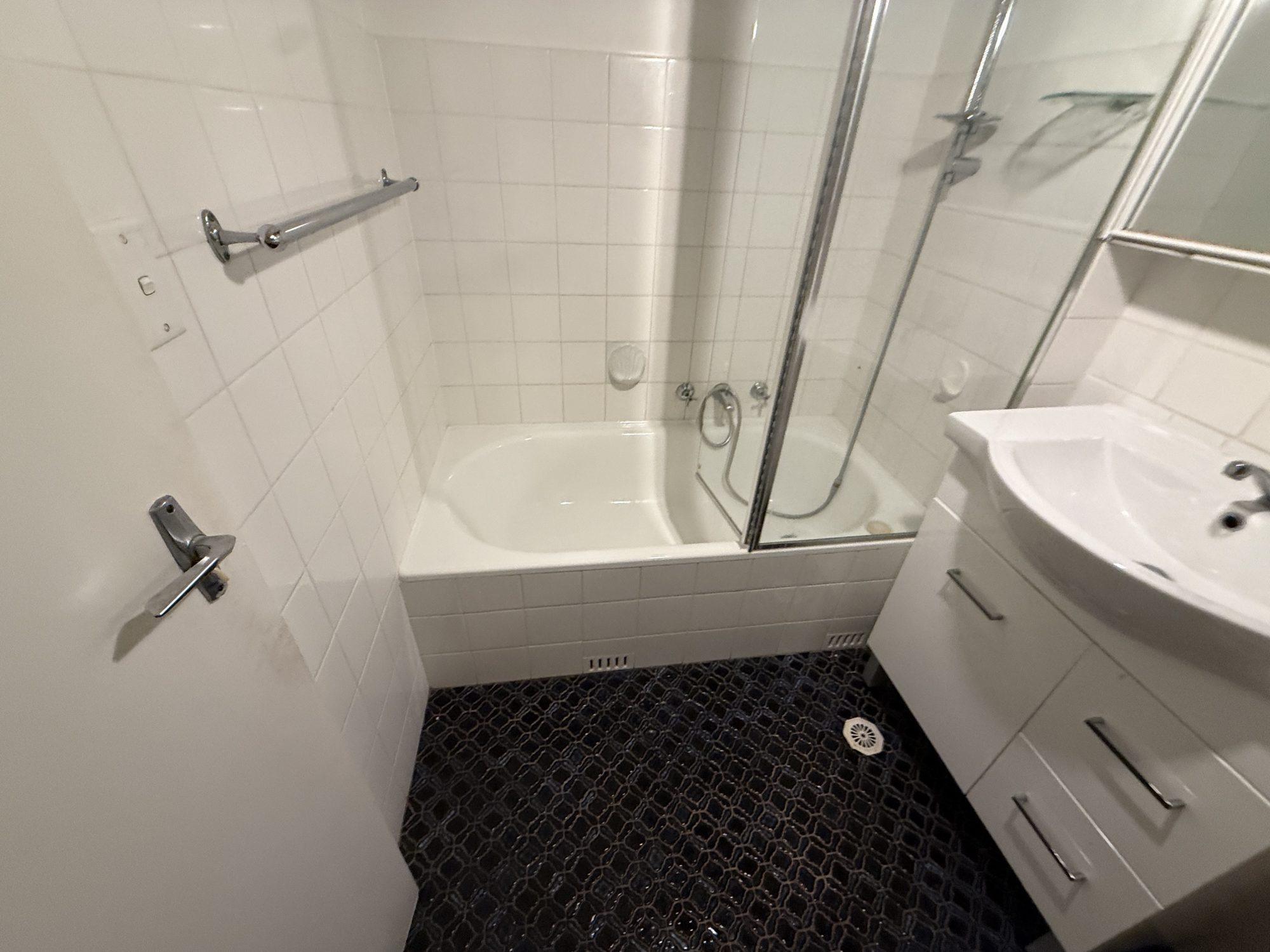
A mid-century apartment block in Elizabeth Bay was replacing the fire dampers in its service risers — the ducts that run vertically through the building, passing through the bathroom ceiling of the same unit on every floor. The mechanical contractor needed those ceilings open. An independent consultant inspected them first and confirmed what the age of the building suggested: the bathroom ceiling panels were chrysotile asbestos cement. Bonded, non-friable, and not something a damper installer is allowed to cut a hole through.
The strata manager called us with the consultant’s report in hand. Within a day they had a quote for the four bathrooms the report covered. Within a week the scope was ten.
Asbestos in the Ceiling: Panels, Popcorn and What Each One Means
“Asbestos in the ceiling” covers two very different materials, and the difference decides who can touch it.
Fibre-cement ceiling panels and sheeting — what this building had — are bonded asbestos. The fibres are locked in cement. Removed whole and wet by a Class B licensed crew, they release very little, and the work is routine for us.
Textured, sprayed or “popcorn” coatings and vermiculite insulation are a different animal. Those can be friable — crumbling, fibre-releasing — and friable asbestos is Class A work under a licence HazWreck does not hold and will not pretend to. If your ceiling is a sprayed or textured coating rather than a flat sheet, the first call is to a NATA-accredited test, and the second is to a Class A removalist. We will tell you that on the phone rather than turn up and find out.
A flat painted panel with a light fitting in it, in a building from the 1950s to the 1980s, with no record of replacement: assume bonded asbestos cement until a report says otherwise. Here the report said exactly that.
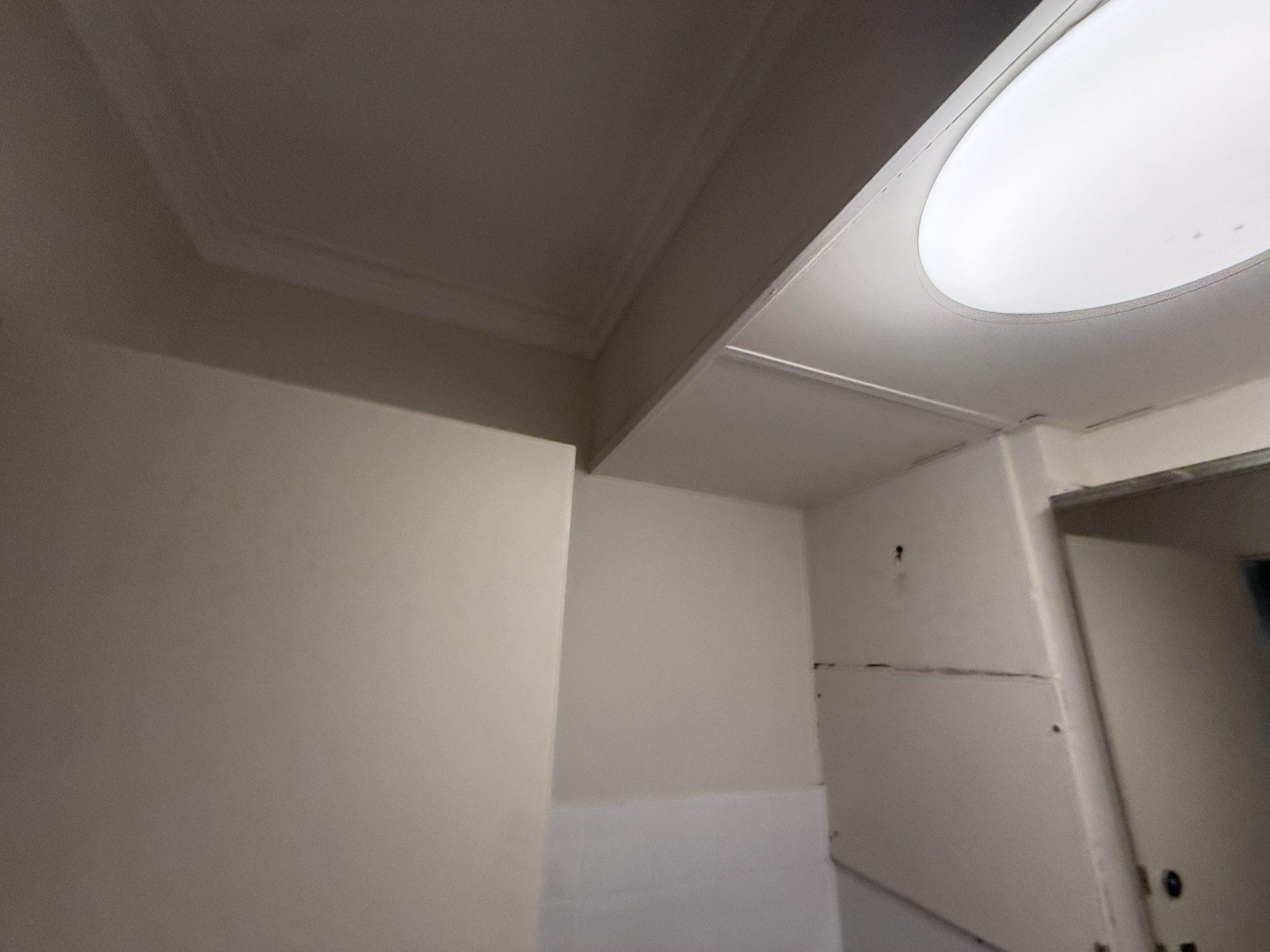
The Asbestos Register Is the Starting Point, Not the Scope
Every strata scheme with a building from that era should have an asbestos register and a management plan, and the consultant’s inspection report is what turns a line in the register into a scope of works. Our quote was written against that report: which units, which ceilings, which material, and — just as important — what was excluded. Wall sheeting, cornices, anything the report did not cover, and the reinstatement of the ceilings afterwards were all by others.
That precision matters in a strata job because the people paying are a committee, and the people living with the work are ten households. A scope that says “bathroom ceiling panels in these units, to this report, with this clearance” is something a manager can put in a notice to residents and a motion to a committee. A scope that says “asbestos removal, from $X” is not.
Why Ten Units Cost Less Per Bathroom Than Four
The first quote covered the four units in the report. Before we mobilised, the strata manager asked what it would cost to do all ten bathrooms in the two risers at once, because the damper programme was going to reach every floor eventually.
The answer surprised them, and it is the most useful number in this story. Almost half the cost of a job like this is fixed per mobilisation: site establishment and containment, the SafeWork NSW notification, the disposal minimum (a licensed facility charges by the tonne with a one-tonne floor, whether you bring one bag or forty), and the independent hygienist’s visit. Those costs are the same whether the crew removes one ceiling or five. The actual panel removal is the smaller part.
So doing ten bathrooms across two mobilisations cost a great deal less per bathroom than doing four now and six more later, one or two at a time as each damper came due. The revised scope was issued, a works order came back, and the programme went from a four-unit job to a two-day, ten-unit job. If you manage a block, that is the question to ask your removalist before you sign: what else is in the register that we will have to do anyway?
Form 65, Resident Notices and the Two-Day Plan
Licensed removal has to be notified to SafeWork NSW — the Form 65, five calendar days before work starts. That set the earliest start. The strata side had its own clock: confirmed access to every unit, personal items out of the bathrooms, and notices to residents in line with the by-laws. We wrote the client responsibilities into the quote so nobody discovered them on the day.
The plan was two mobilisations of five units each, one riser per day, a crew of six, with an independent hygienist booked for the end of each day. Nineteen days after the consultant’s report, the first mobilisation was on site.
Inside an Occupied Building: Containment From the Lift to the Bathroom Door
Asbestos removal in an occupied apartment block is mostly a logistics job wearing a hazmat suit. The material is the easy part. The hard part is that the route from the bathroom to the truck passes other people’s front doors.
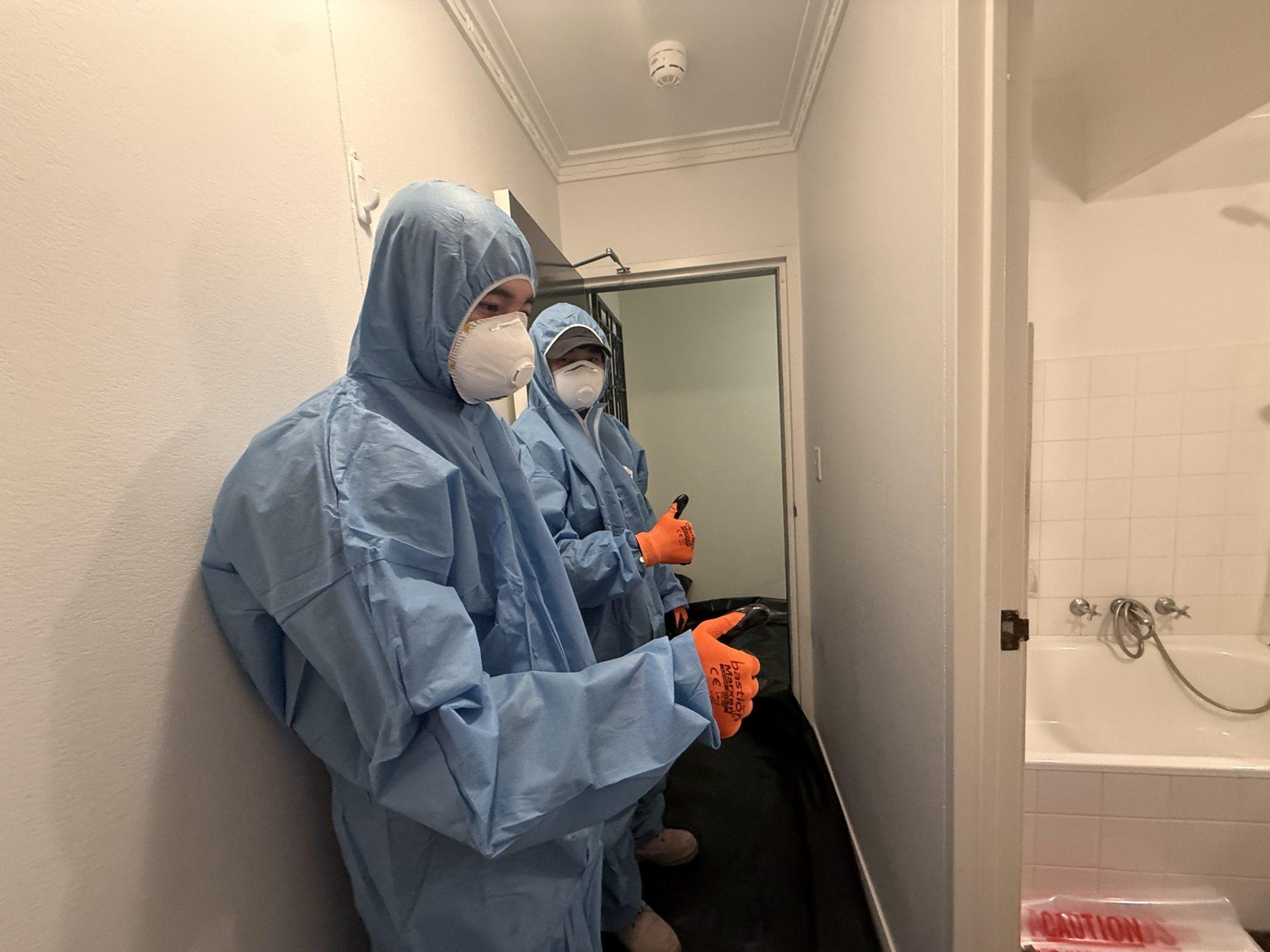
Every floor surface the crew or the waste would cross — the unit’s hallway, the bathroom floor, the common corridor to the lift — went under heavy plastic sheeting before the first panel was touched. Warning signage at the unit door. A HEPA vacuum and negative air at the work face. Panels wetted and taken down whole, then double-bagged at the workface in 200-micron polyethylene bags, sealed and labelled before they left the bathroom, so nothing moved through the building except a sealed bag. Coveralls and gloves changed between units; the vacuum run over every surface before the sheeting came up.
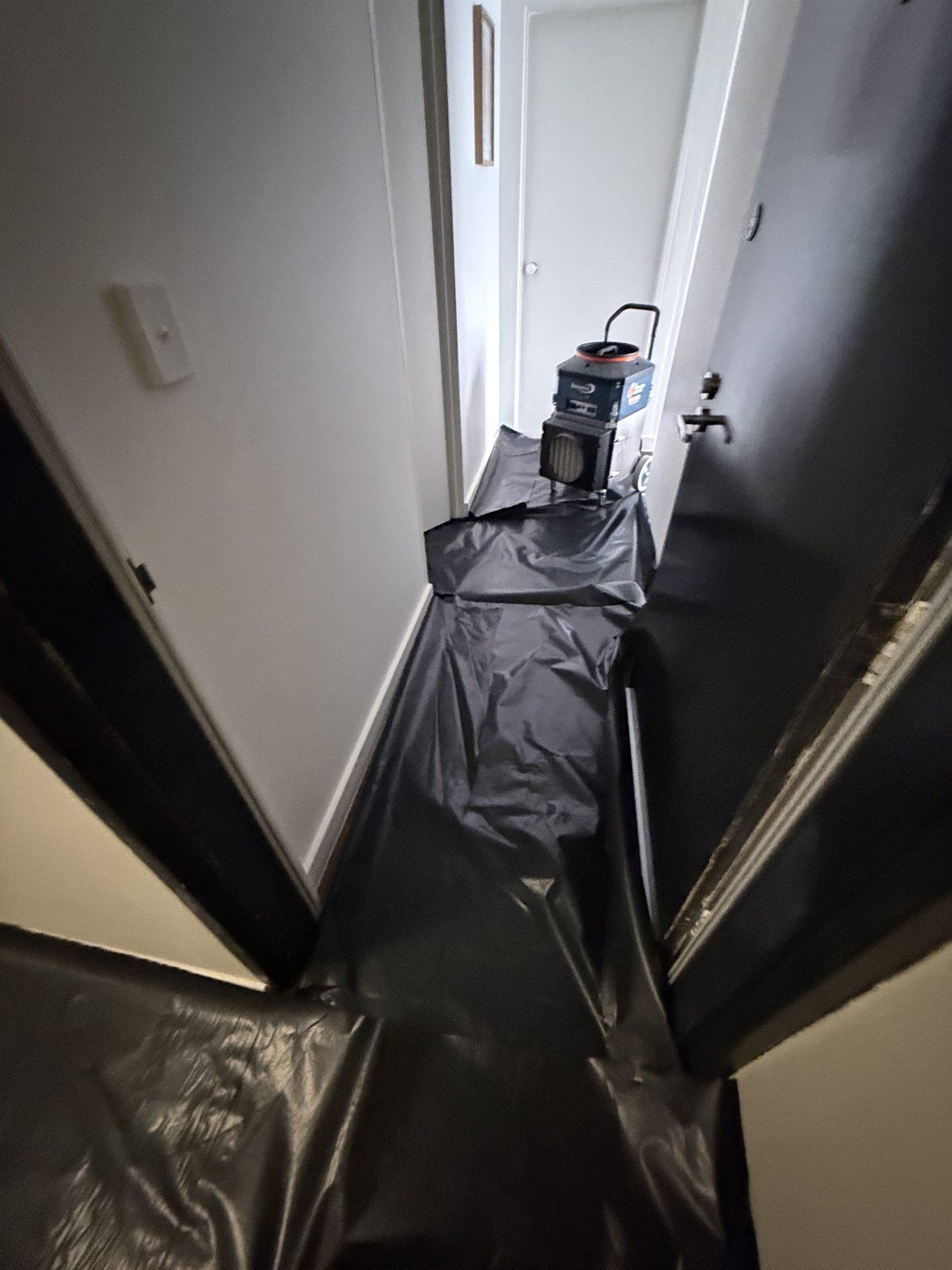
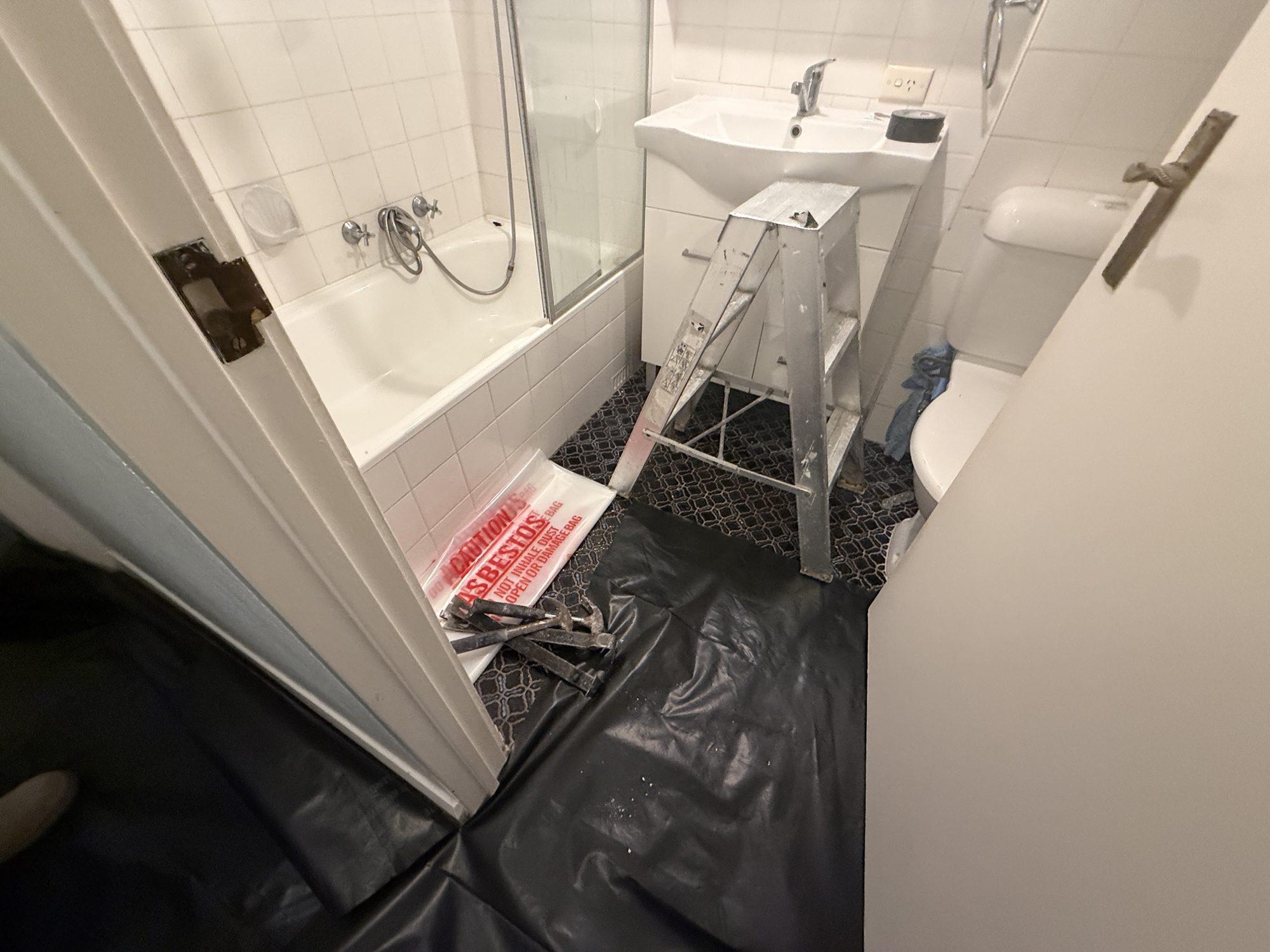
Panels Out, Dampers Exposed, Bathrooms Handed Back
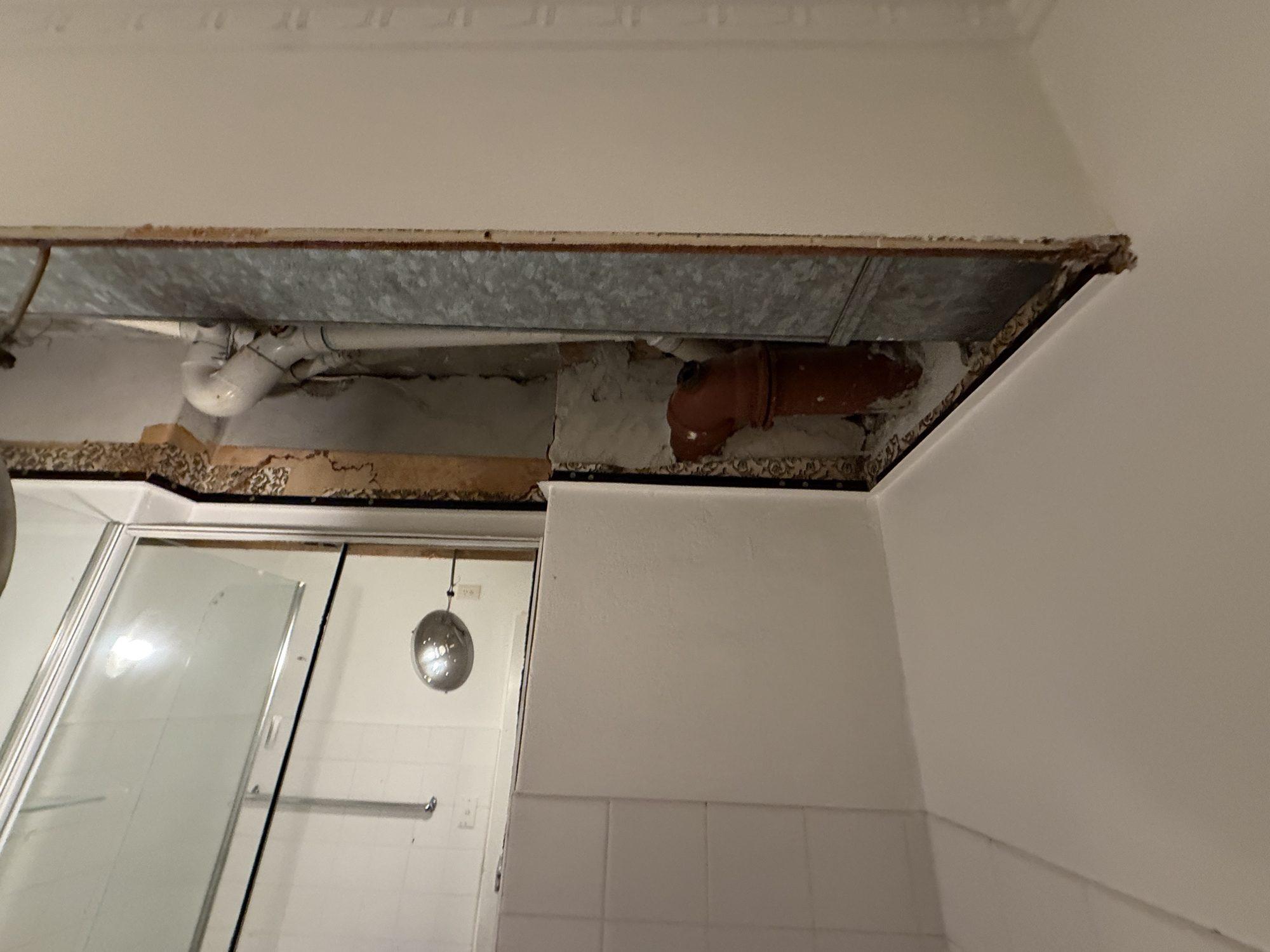
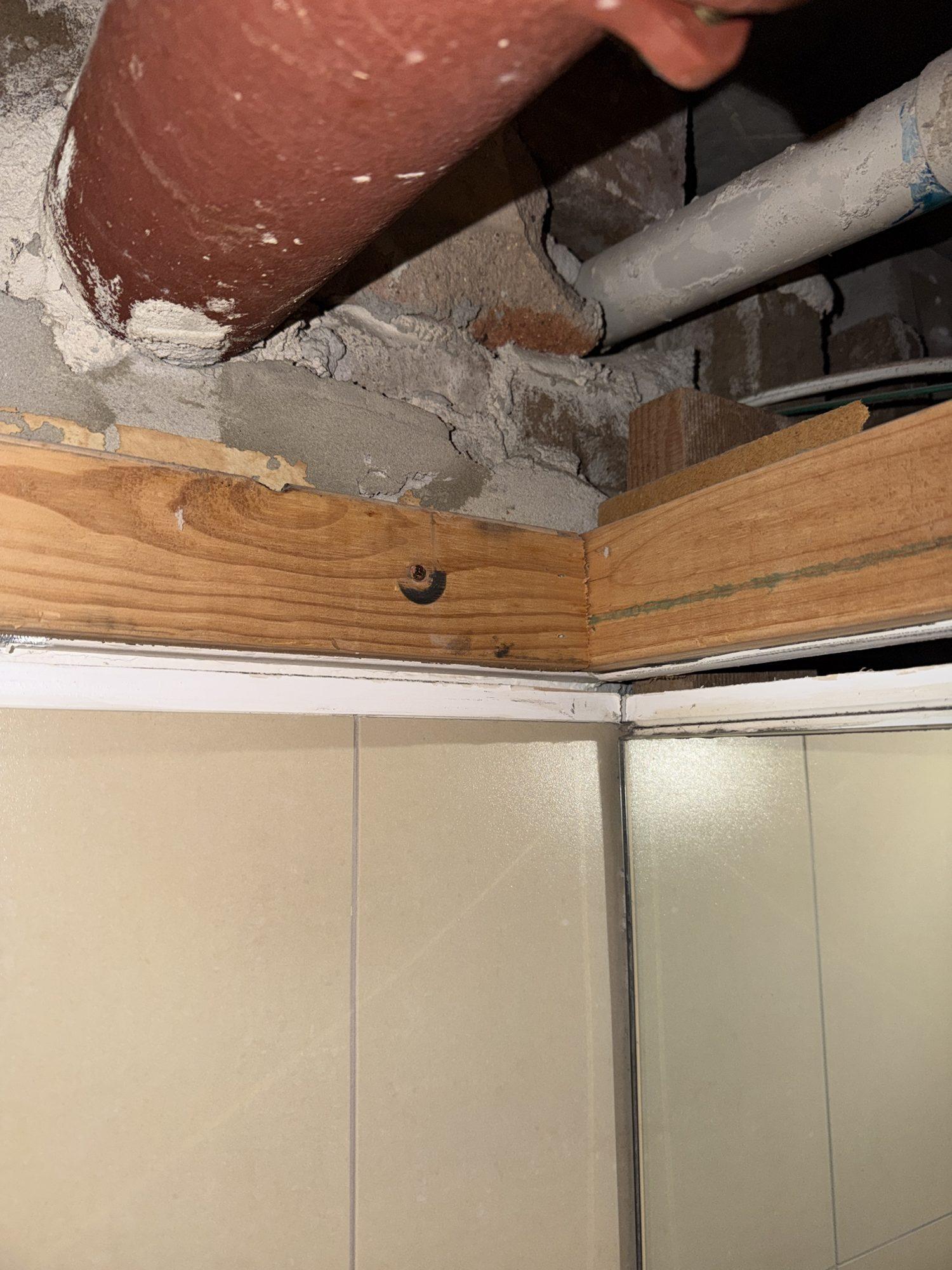
Behind each panel was the same picture on every floor: the galvanised duct with the damper position, the pipework of the riser, and the slab above — the geometry that made this ten bathrooms rather than one. The mechanical contractor got exactly the access they had asked for, and the residents got their bathrooms back with a clean, open ceiling that the strata’s own trades would reinstate after the damper work.
Cleared the Same Afternoon: Why Residents Were Home That Evening
This is the part that makes or breaks an occupied-building job, and it is the part most quotes leave vague. A bathroom is not safe to use again because the removalist says so. It is safe when an independent licensed asbestos assessor has inspected the area and issued the clearance certificate.
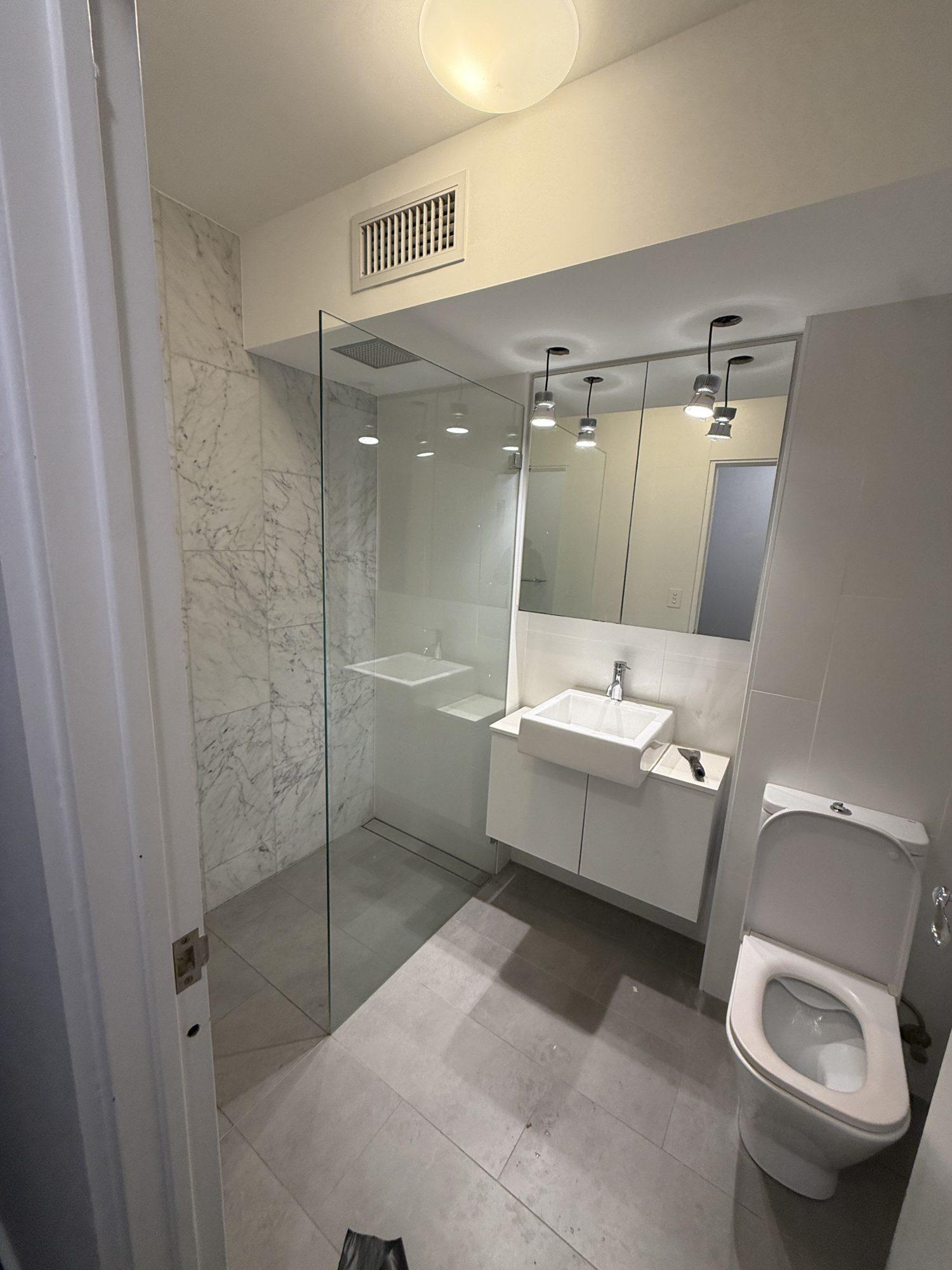
We booked the hygienist for the end of each mobilisation as part of the scope, so the five units done that day were inspected that afternoon and cleared before the crew left the building. Residents reoccupied the same evening. Nobody spent a night out, nobody waited three days for a piece of paper, and the strata manager received the clearance for each mobilisation alongside the disposal dockets for the waste — the two documents the scheme’s asbestos register, its insurer and any future buyer will want to see.
What Asbestos Ceiling Removal Costs in a Sydney Strata Block
Ten bathroom ceilings across two mobilisations — notification, containment, licensed removal, double-bagged disposal, two hygienist clearances and the documentation — typically lands between $10,000 and $13,000. The shape of the number matters more than the number: roughly half of it is per-mobilisation fixed cost, so the marginal bathroom is cheap and the lone bathroom is expensive. A single unit done on its own can cost a third of what ten cost together.
Two things keep a strata quote honest. First, it should be written against the consultant’s report, with the exclusions spelt out, so the committee knows what it is approving. Second, the hygienist should be in the scope, not an extra. Our Sydney asbestos removal cost guide has current ranges for the common residential jobs; for a strata or commercial programme the price is fixed after we have read the report and walked the building.
Lessons for Strata Managers
1. The register tells you what is there. The report tells you what to do. Get the inspection report before the quote, and have the quote written against it.
2. Batch the units. Half the cost is fixed per mobilisation. If the damper, plumbing or electrical programme will reach every floor, remove every ceiling in the riser at once.
3. Put the resident logistics in writing. Access, personal items out, notices under the by-laws. Written into the quote, they happen; left to the day, they stop the job.
4. Ask who books the hygienist. Same-day clearance is what lets people back in. If it is not in the scope, your residents are waiting on a phone call.
Managing a Block With Asbestos in the Register?
Send us the consultant’s report or the register entry and tell us what programme is waiting on it — dampers, plumbing, a refurbishment. We will price the removal against the report, unit by unit, with the notification, disposal and hygienist clearances included, and tell you honestly where batching the units saves the scheme money. Licensed Class B asbestos removal, CM3 prequalified, and used to working around the people who live there. We wrote up a similar lesson from a commercial site in The Asbestos They Didn’t Expect; the building was different, the principle was the same.
Related services
How HazWreck Can Help
Planning a project?
One Contractor, From Hazardous Materials to Handover
Call before the project starts — one conversation at planning stage can save weeks on programme.